Budget somewhere between $200 and $700 to have a pressure regulator replaced or put in, and plan on a number near $400 if nothing complicates the job. National figures from Angi and HomeGuide agree on that spread, and they are a yardstick, not a Long Beach quote. The valve is cheap; labor, access and surprises behind it decide the rest. If you are chasing weak flow rather than too much of it, start in the low pressure section of this site.
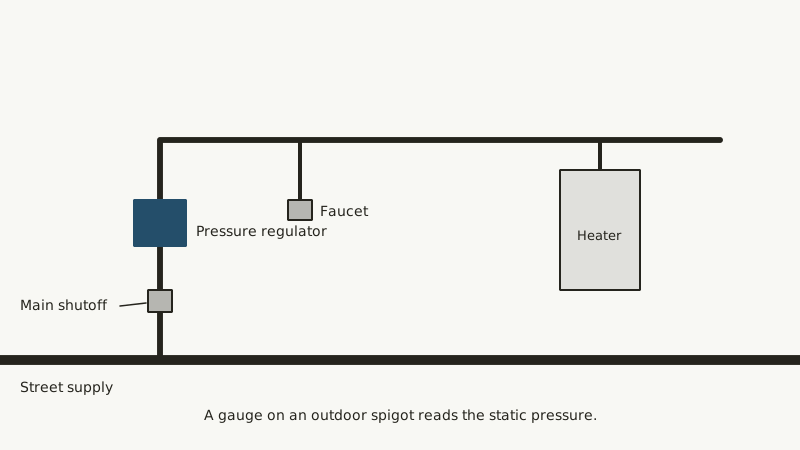
The regulator lives at the point of entry, near the main shutoff, and trims street pressure to something your pipes and fixtures can live with. Pipes that hammer, a heater relief valve that weeps, a tank that keeps refilling itself and a shower like a pressure washer all hint that it has failed or never existed.
What is the plumber's fee for sorting out a pressure complaint?
The cause sets the price. A dead regulator runs roughly $200 to $700 to swap. A clogged aerator or half-shut valve costs much less, while corroded galvanized lines or a leak hidden in drywall cost much more. A plumber needs a gauge reading before naming a figure.
Pressure complaints split into two directions. Too high: regulator, thermal expansion or a supply-side issue. Too low: a regulator stuck partly shut, a clogged pipe, a faulty shutoff, a leak or a restriction out in the street. The visit is where the diagnosis happens, so ask for a gauge reading on an outdoor spigot first. More on weak flow sits in why water pressure drops.
What does the regulator itself cost, and what is labor?
Published guides put the part at about $50 to $150 for a standard residential valve, with labor of roughly $225 to $450 on top. HomeGuide lists 1 to 3 hours for the job and a national average near $475. Angi's average sits near $400.
Here is how the numbers stack up:
| Item | Typical range (guide only) |
|---|---|
| Regulator valve, standard home size | $50 to $150 |
| Labor, like-for-like swap | $225 to $450 |
| All-in replacement, most homes | $200 to $700 |
| New installation where none exists | usually at the upper end, more with new piping |
| Expansion tank, if the code calls for one | priced separately |
Every figure in the table comes from national cost guides read in 2026, not from a local price list. A written quote from a Long Beach plumber is the only number that binds.
Which factors push a regulator job up or down?
Access, valve size, the shape of the nearby pipe, a possible expansion tank, permit fees, and how reachable the old valve is. A regulator in an open garage wall with fresh fittings is the cheap case. One buried in a crawl space or behind a stucco wall with brittle galvanized pipe is the expensive one.
Older Long Beach homes make this concrete. A 1930s bungalow around Belmont Shore may have galvanized or old copper stubs that do not tolerate being cut and reconnected, so the plumber may recommend new sections. A postwar Lakewood tract house on a slab often has the main entering at the front, with the regulator easy to reach. The price follows the pipe, not the neighborhood.
Once a regulator closes the system, a thermal expansion tank is often needed; see what that adds under expansion tank replacement. Not sure where yours hides? Finding the regulator shows the usual spots.
Does code demand a regulator, and is a permit involved?
Under section 608 of the state plumbing code, static pressure over 80 psi means a regulator is needed, and the result must be 80 or below. In Long Beach, plumbing work generally needs a permit unless it is a repair made without new materials, so a plumber will tell you whether your swap qualifies for the exemption.
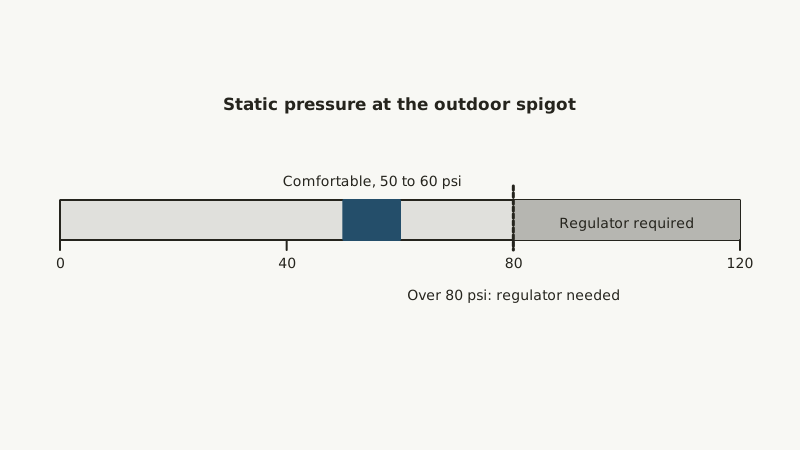
Many sources point to 50 to 60 psi as a comfortable range for the inside of a house, and an approved regulator with the correct rating. Contractor licensing applies to most plumbing work here, and the state board's website offers a search to confirm one. San Pedro and Wilmington use LADBS for permits, not the City of Long Beach.
Find out if the quote bundles the permit fee, inspection and any fixes an inspector might require. How adjustment works is explained in adjusting a regulator valve.
Is swapping it myself a way to save?
Some handy owners try it, but it is no casual swap. You must shut off the main, relieve pressure, match the valve size and thread type, and set the pressure with a gauge afterward. One bad joint at the main can flood the house, and a permit may still apply.
If you do the work yourself, the part costs $50 to $150, so the saving is labor, perhaps $225 to $450. Weigh that against the risk of a leak or a wrong setting that stresses the water heater. The page on replacing a pressure regulator outlines each step.
Any safe ways to trim the price?
Measure before buying. An inexpensive gauge threads onto an outdoor spigot and tells you the static pressure in seconds, so you know whether the regulator is really at fault before paying for a new one. Then group jobs: a regulator swap, an expansion tank and a leaking shutoff all fixed in one visit share a single trip charge.
Ask for the old valve back if you want proof it failed, and request two written quotes covering identical scope. Do not pick the lowest figure if it leaves out the permit. Our general plumber cost page explains what usually goes into hourly rates and trip charges.
Common questions
What does the visit last?
Cost guides list one to three hours for a straight swap of a reachable valve. New installs, longer pipe runs or an added expansion tank stretch the visit. Water is off while the plumber works, so fill containers beforehand and plan around showers and laundry.
What belongs in a regulator quote?
See that it lists the valve, labor, permit, any expansion tank and cleanup. Ask what pressure will be set and whether you can watch the gauge. Look up the contractor on the licensing board's website, and have the figures on paper before anyone starts.
Is it wise to be home during the swap?
Best to, so someone can show the main shutoff, open the door and agree to any price shift. The water goes off during the swap, and the plumber may need to run taps afterward to clear air. If you cannot attend, arrange a trusted person and a phone line.
For what the work involves beyond the price, see Harbor Lights Plumbing plumber.
References
Updated