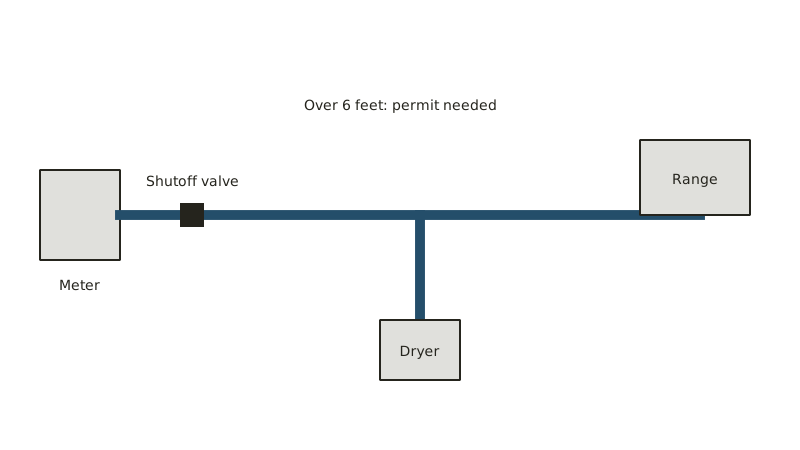
Gas piping in Long Beach is plumber's work: running a new line, extending one, relocating it, capping it, or fixing a leak. Each job carries a plumbing permit and a pressure test watched by an inspector. You may exchange an appliance on an outlet that already exists, yet fresh piping belongs to a contractor. Unsure what you need? Look over the services on our home page, then ask for pricing through the quote form.
Smelling gas right now? Who gets the call?
Leave the house first, with everyone, and make the call from outside. Do not touch switches or use a flame. Which number you dial depends on who delivers your gas: Long Beach Energy Resources runs its own system for Long Beach and Signal Hill, and SoCalGas serves many neighboring areas. The gas bill shows which of the two supplies you; when in doubt, dial 911.
Long Beach Energy Resources lists its gas emergency line as 562-570-2140. SoCalGas lists 1-800-427-2200 for its own territory. Neither is a plumber's number; the utility checks the leak and makes it safe, and the plumber fixes your piping afterward. The utility decides when the house is safe to re-enter.
If a digging crew, or you with a shovel, has hit a line, the same rule applies: clear the area and call from a distance. A strike during digging, whether by a crew or by you, ends with the utility rather than a repair kit.
Who may install or repair gas piping?
Contractors with the matching California classification install gas piping, and the City of Long Beach issues the permit. The City will also issue one to an owner who lives in a one- or two-family house and does the work personally, though that owner still faces the inspection. Hooking an appliance to an outlet already in place, with an approved connector, is where most do-it-yourself jobs should stop.
California licenses contractors above a $1,000 labor-plus-materials job, yet gas piping should still go to a contractor at any dollar figure. Look up the number on the board's website before the first fitting goes in. The City carves out one small exception: a run of up to six feet from an approved outlet to an appliance sitting in that same room needs no permit.
Hiring safely comes down to four things: a license number you can verify, a written price, the permit named in the paperwork, and no cash demanded up front.
What does a gas line job actually involve?
First comes a walk of the route. The plumber sizes the pipe to the appliances it must feed, pulls the permit, installs black iron, corrugated stainless tubing or another approved material, and tests the result. The inspector then watches that test. Walls stay open until it passes, so patching and paint come last.
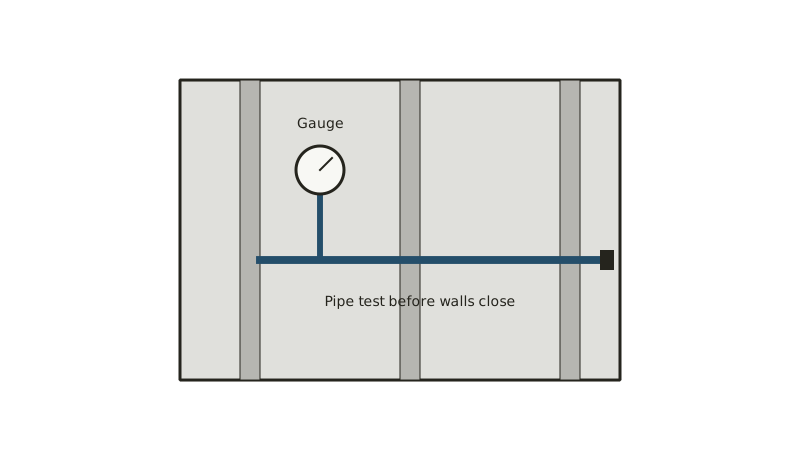
The City of Long Beach publishes the main rules for gas piping:
- A permit is required for piping over six feet.
- New piping gets an air-pressure test at 10 psi, held a quarter hour with no pressure loss. Water is never used to test gas lines.
- The inspector must be called before any gas pipe is covered, and witnesses the test.
- Piping may not run in the ground under a building, and exposed pipe must stay at least six inches above grade.
- Buried metal pipe needs protective coating and 12 inches of cover.
- Moving or upsizing a gas meter means contacting the utility, not the plumber alone.
For connector details, read half-inch flexible gas line; for pricing, what a gas line job costs.
Which jobs do people usually book?
Typical requests from Long Beach homes: a range or cooktop line, a dryer outlet, a barbecue or fire-pit stub, a fireplace log set, a moved water heater, and capping something no longer used. All are short runs. All still need the pressure test and sign-off.
A few notes by project:
- Stove or oven. Needs a shutoff valve within reach and a connector rated for the appliance.
- Fireplace. Often the longest run, since the old hearths in 1920s and 1930s houses may have a capped stub in a wall.
- Outdoor kitchen. Buried pipe with a protective coating and a trench, plus a call to find existing underground lines before digging.
- Capping a line. Removing a gas dryer or range leaves a live outlet; a plumber caps it with a proper fitting.
- Moving a line. Remodels in Belmont Shore and Bixby Knolls bungalows often shift a kitchen wall, and the gas moves with it.
Heater work has extra rules of its own: a discharge pipe ending six inches to two feet above the ground, a shutoff ahead of the connector, and seismic strapping. A tank that is actively leaking has its own page, covered in urgent heater leak help for the full story.
How much does it cost?
Guides citing Los Angeles figures run about $17 to $28 for each foot of pipe, and a typical appliance line runs $1,200 up to $3,500, with permit, test and inspection included. Trenching adds to outdoor runs, and Southern California permits often cost $75 to $200. Treat all of it as outside guidance, not a bid from us.
Three things push a quote up:
- Distance. Every added foot of pipe adds material and labor.
- Access. Fishing pipe through plaster costs more than hanging it along an open garage wall.
- Meter or service capacity. Adding a big appliance can require a bigger line from the meter.
The written quote is your anchor; ask whether it includes the permit, patching and inspection fee. Salt air near the coast can corrode old fittings, so surprises behind a wall are possible.
How do I tell a dodgy plumber from a good one on a gas job?
Get the license number from the contractor, search it in the state database, then find out which permit covers the job, and get a written scope and price. Unpermitted gas work hides a danger and surfaces again at sale time. Anyone who calls the permit unnecessary should not get the job.
More warning signs: pressure to begin within the hour when nothing is leaking, an offer to skip the inspection, and a deposit above the state cap, a ceiling of a thousand dollars, or less when a tenth of the job price is a smaller sum.
Is there money in the gas line trade?
Federal data show a national median wage for plumbers of $63,800 in May 2025, with the best-paid tenth earning over $108,420. Specialty and experience push pay up. No source we checked identifies a billionaire plumber, so we will not name one.
Common questions
Can plumbers put in gas lines?
Yes. Feeding gas to a range, dryer, fireplace or grill is ordinary plumbing work. The contractor should hold a state license for this job; Long Beach wants a permit and a pressure test that an inspector witnesses. New gas pipe is not a weekend project, however handy the hardware store makes it look.
Whose number do I dial for a gas leak near my house?
Step outside and phone your gas utility. In its own territory Long Beach Energy Resources publishes 562-570-2140 for gas emergencies, and SoCalGas publishes 1-800-427-2200 across much of the surrounding region. The gas bill names yours. When anyone is in danger, or you cannot tell, 911 is right.
Roughly how long does gas line work last?
Plan for roughly a half day to a full day on a short appliance line, with the inspection booked separately. Longer runs, trenches and finished walls stretch that. Someone who has walked your route can give a firmer estimate, and the quote should spell out what it covers.
Can a plumber cap a gas line?
Yes. Capping seals the pipe end with an approved fitting and a leak test, so the outlet stops being live. Do it whenever a gas appliance leaves the house. A closed valve alone is no lasting fix, and a loose stub inside a wall is a risk.
More in this guide
- Earthquake gas valves
How an automatic earthquake gas shut-off valve works, what installing one costs, when Long Beach needs a permit, and what to do after it…
- Gas lines
What a half-inch flexible gas line can do in Long Beach: the three-foot connector limit, pipe types, burial depth, mobile home connectors,…
- Costs
What a gas line costs in Long Beach in 2026: per-foot installation, leak repair, appliance hookups, earthquake valves and permits, with…
References
- City of Long Beach, plumbing permit and gas piping requirements
- Long Beach Utilities, gas service and emergency number
- SoCalGas, Home Energy and Safety Guide
- California Contractors State License Board, hiring a contractor
- US Bureau of Labor Statistics, Occupational Outlook Handbook, plumbers
- Published gas line installation cost guides from several plumbing and cost sites, checked November 2026
Updated