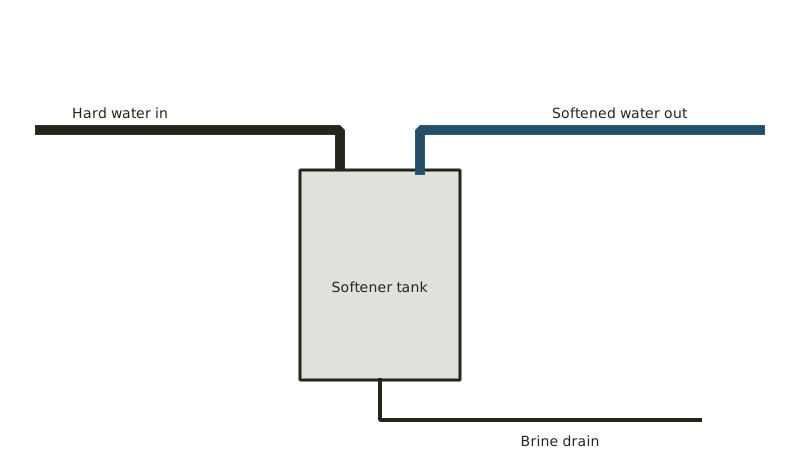
Budget roughly $800 to $3,800 for a salt-based softener once it is installed, with labor alone commonly around $500 to $700 on a straightforward job, according to published guides. The range is wide because equipment, pipe condition and permits differ house to house. For a walk through the work itself, open softener installation with a plumber; the dollar figures stay here.
What is the all-in cost of a softener once it is plumbed in?
Guides list a salt-based softener at $800 to $3,800 installed and a salt-free conditioner at roughly $800 to $4,500. Labor on its own runs $150 to $1,000, and a plain swap sits near $500 to $700. What you pay turns on tank size, brand and how much pipe the plumber has to alter.
A rough breakdown of what that money covers:
| Item | Guide range | What drives it |
|---|---|---|
| The unit | Several hundred dollars, climbing past two thousand | Capacity, valve type, brand |
| Labor | $150 to $1,000, often $500 to $700 | Access, pipe material, drain location |
| Fittings | A modest add-on | Bypass valve, connectors, shutoffs |
| Permit | Varies | City of Long Beach plumbing permit if pipes change |
| Salt, yearly | Roughly $100 to $200 for salt types | Household size, hardness |
These numbers come from other publishers, so they describe the market and not a Harbor Lights bid. The one that counts is the price you are handed in writing after someone has seen the water line.
How hard is Long Beach water, and does hardness change the price?
Hardness changes which size of softener you need, which in turn moves the price. Long Beach Utilities reports two zones in its 2025 water quality report: a blended-water zone averaging about 76 parts per million (4.4 grains per gallon) and a zone fed mostly by imported water averaging about 220 ppm (12.8 grains). Ask which zone your address falls in.
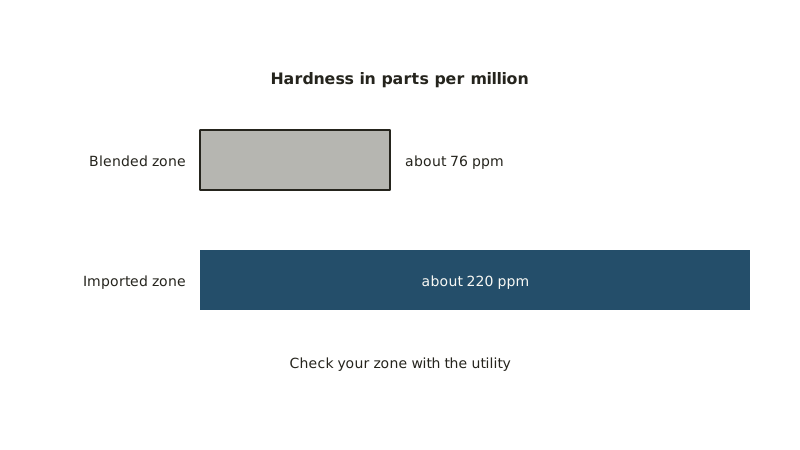
Why it matters: a bigger resin tank handles harder water for longer between regenerations, but costs more. In the blended zone a small tank may be enough, while a home in the harder zone could justify a larger one. San Pedro and Wilmington are supplied by LADWP rather than Long Beach, and Lakewood and Seal Beach by their own providers, so check that supplier's report instead.
Hard water irritates more than it endangers, and it is one reason owners also look at water heater replacement cost, since scale shortens a tank's life. A whole-house softener installation page covers how the work is done, and our areas we cover page shows which neighborhoods we serve. What pushes many owners toward a softener is scale, which clogs fixtures and works against water heaters. If crusty faucets are the only complaint, removing hard water scale might be enough.
Which softener type and brand change the bill?
Brand matters less than type. A standard salt-based unit gives up hardness minerals it has captured and takes on sodium or potassium, then flushes brine, which means it needs a drain connection. A salt-free conditioner reduces scale without removing minerals and needs no drain, but it costs more up front and works differently. A twin-tank model runs more again.
Retail names such as Kinetico, Culligan, Rheem or a warehouse-club model all fit this pattern. Some dealers include installation in the price, and some sell the box only, so a "cheap" unit can turn out dearer once a plumber is hired. Ask whether delivery, hookup, a bypass, a permit and the disposal of the previous tank sit inside the price or arrive as extras.
Houses plumbed with a ready "softener loop" are a shortcut: if a bypass loop is already in the water line, the connection takes less time and labor falls. Older Belmont Shore and Bixby Knolls cottages from the Roaring Twenties through the 1950s rarely have one, and aging galvanized steel can slow the job or demand repiping.
Does California limit softeners, and what about permits?
California does not ban softeners statewide. State law lets a local agency restrict salt-discharging units only after a study and a public hearing, and salt-free conditioners are generally outside those limits. We found no Long Beach rule on this, so ask Long Beach Utilities. Plumbing alterations here do need a City permit.
Long Beach wants a plumbing permit before piping is altered or replaced, with some small repairs excused. A softener normally splices into the supply line, so assume a permit and have the contractor file it. A contractor license is also a legal must from $1,000 of combined labor and parts, so confirm the contractor's number on the board's website first.
What is the fairest way to line up two or three bids?
Compare bids on five points: exact model and capacity, who supplies the equipment, what the labor covers, the permit, and where the retired tank ends up. A price with any blank is incomplete. Get the grand total, tax and delivery included, on paper.
Ask where the drain line will end, since brine and rinse water belong in a proper drain, never the garden. Ask what the manufacturer's warranty covers on tank, valve and electronics, and whether the installer's workmanship has its own terms. A large deposit demand is a red flag; state law caps a home improvement deposit well below that.
An online "installation cost calculator" is just these parts added up: unit plus labor plus parts plus permit, with a bump for repiping. Do the same sum with real quotes beside the guide ranges above.
Common questions
How long does installing a water softener take?
A routine swap on pipes within easy reach is often a few hours to one day. Time stretches when old steel pipe must be cut, a new drain line gets run, or the permit inspection falls on another day. Request an estimate in the quote and expect the water off for part of it.
What do I ask an installer before agreeing?
Begin with the installer's license number and the state's online lookup. Then pin down model, capacity, warranty, permit responsibility, disposal of the existing tank, and the plan if hidden pipe trouble shows up. Do not let work start until the full price is in writing.
Does going salt-free save money?
Usually not up front. Published guides show salt-free units installed at roughly $800 to $4,500, overlapping salt types. They save the yearly salt cost, about $100 to $200 for salt types, and need no drain. They condition scale rather than remove hardness, so results differ by household.
Does somebody need to stay home for the install?
Yes, around the start and finish. The installer needs to reach the main line and the unit's location, and you will want to witness the first startup and pick up the controls. Mention pets, gates and any laundry or bathing plans for that day beforehand.
For what the work involves beyond the price, see Long Beach plumber.
References
- Long Beach Utilities, 2025 Annual Water Quality Report
- California Health and Safety Code sections 116775 to 116795, water softeners
- City of Long Beach, plumbing permit requirements
- Published water softener installation cost guides from several plumbing and water treatment sites, checked November 2026
Updated