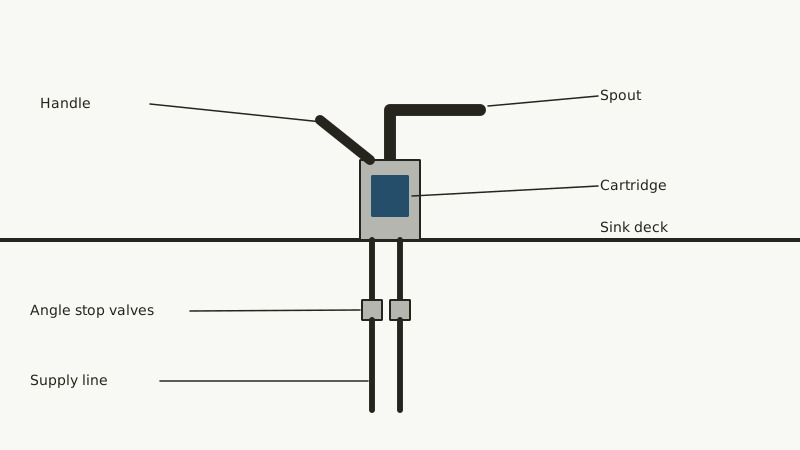
A dripping spout is a fixture problem, not a plumbing disaster. Inside the handle sits a seal that has hardened, a cartridge that has scored, or a seat that has pitted. Replace that piece and the drip stops. It belongs to our collection on sink fixtures and disposals, and it is written for people who own a screwdriver and an hour.
By EPA WaterSense math, a tap that drips once per second wastes upward of 3,000 gallons over a year. Older Long Beach bungalows often still run original fixtures, so a drip is a good excuse to update.
What type of faucet is dripping, and from where?
Look first at the handles. A pair of knobs needing several turns signals compression washers. One lever means a cartridge, a ball or a ceramic disc hides inside. Water leaving the spout blames a tired seal or seat; water creeping out around the base or handle blames an O-ring or packing.
Write down the brand if you can see it, and any model number stamped under the sink or on the cartridge. Delta and Moen sell replacement cartridges matched to the model, so buying the wrong one is how many repairs fail. Bring the worn piece along to the hardware store counter and compare side by side.
Before touching anything, close the little oval valves under the sink, the angle stops, then open the tap until the flow dies. If those valves are stuck or missing, shut the house main instead.
What are the steps for a sink faucet that drips?
Shut off the supply, plug the drain so screws cannot vanish, pry up the decorative cap, remove the screw underneath and take the handle off. Next draw out the stem or cartridge, then fit a new washer, O-ring or whole cartridge that matches exactly, reassemble in reverse order, and turn the water on slowly.
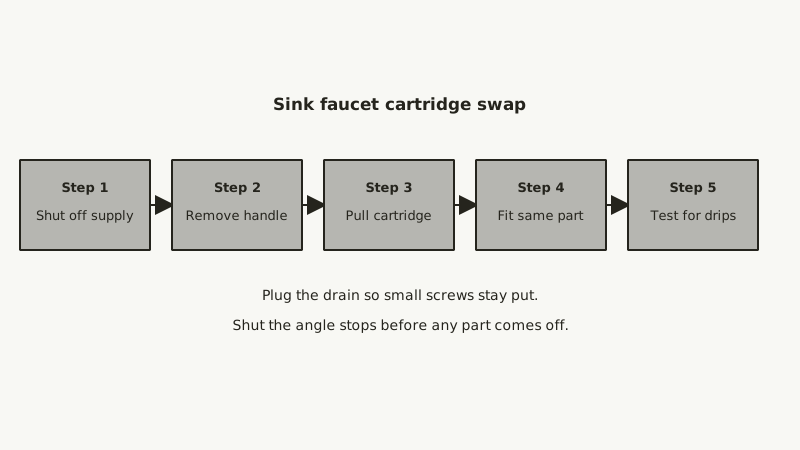
On a compression faucet the culprit is the rubber washer at the stem bottom. Pitted brass beneath it, the valve seat, can chew through new washers, and a seat tool or a replacement stem solves it. On a ball-type kitchen faucet, replacing the seats and springs plus the O-rings tends to work. Cartridge faucets are easiest: pull the retaining clip, slide the cartridge out, push the new one in lined up the same way.
A bit of plumber's grease on rubber parts helps them seat. Wrap tape on the jaws of a wrench so the chrome does not scar. Leaking from the handle on a kitchen faucet generally traces to a cheap O-ring.
My tub or shower faucet keeps running. Now what?
The valves for tubs and showers sit inside the wall, yet the logic matches a sink: kill the water, unscrew the lever and escutcheon plate, withdraw the stem or cartridge, and put in an identical one. If the dripping is only at the spout, the tub diverter or valve is worn, and a shower that dribbles after you shut it off usually needs a new cartridge.
Check whether the house has individual shutoffs for the bathroom. Many older Long Beach homes do not, so you may have to close the main. If the trim comes off but there is no way to reach the valve, or the valve body is corroded, stop. A shower valve soldered into the wall is plumber work. Our write-up on tub faucet repair follows the sequence with a bathtub in mind.
Dripping that continues after a new cartridge may mean damaged seats inside the valve body. That takes a replacement of the whole valve and often some wall work.
Is an outside spigot a do-it-yourself fix?
Often, yes. If water seeps around the stem when the spigot is on, give the packing nut a small turn, and if that fails replace the packing or the washer inside. If the spigot drips from the spout, the washer at the end of the stem is worn. Shut the supply to the line first.
Hose bibs on coastal lots live in salt air, so rust and mineral crust are common. Remove the handle, unscrew the packing nut, pull the stem and swap the washer. Freezing is rarely the issue in Long Beach, but a weeping bib still soaks the soil beside the foundation.
Where a vacuum breaker on the spigot spits water, replace the breaker. If the pipe behind the spigot is leaking inside the wall, that is a plumber job.
When does hiring a plumber beat doing it myself?
Phone a pro if the supply will not shut off, if the valve is corroded or soldered inside the wall, when a fresh part still drips, when a ceiling below turns damp, or when the fixture is so old that parts no longer exist. In that case replacing the whole faucet is cheaper than another repair.
For bigger jobs involving the supply lines, a new fixture or anything behind finished walls, Most plumbing work in California falls under a contractor license requirement, and the state's licensing board runs a lookup on its website. Long Beach also requires a permit for plumbing alterations, though replacing faucet parts is covered by an exemption for repairs without new materials, per the city's code page.
Want help? Send the fixture type and the symptom through the quote form. A disposal that leaks beneath the same sink is covered on our disposal installation service page.
Common questions
What is a realistic time for the fix?
Budget around half an hour for a first cartridge swap, and about the same for a compression washer. Tub and shower valves take longer because of the wall access. A plumber can usually finish a straightforward repair in an hour or less once the part is on hand.
What should be settled before I pay a contractor?
Find out if the quote means repair or full replacement, whether the part is the maker's cartridge or a generic one, whether any warranty applies, and who patches a wall if one is opened. The state board's website verifies licenses. Insist on price and scope on paper first.
Do I have to stay for the visit?
Preferably, unless someone you trust can let the plumber in. Expect to show the shutoff and the fixture, mention earlier repairs, and approve any change in the price. A short job at a kitchen or bathroom sink needs little more than a quick walkthrough.
For the wider picture, start with plumber long beach.
References
Updated