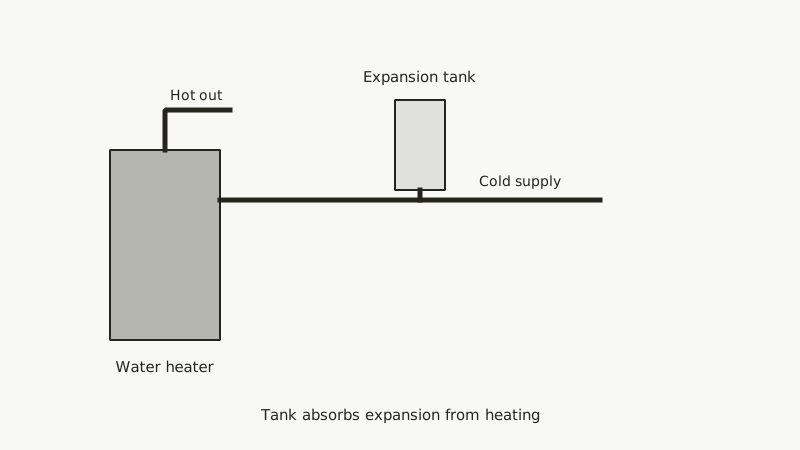
Warm water occupies more space than cold. Where the supply line cannot push back into the street, the surplus has to land somewhere, and a small air-cushioned tank beside the heater takes it. When that tank fails, pressure jumps whenever the burner or element runs. The water heater repair hub covers other heater faults, and what follows deals with this one part.
What job does the tank beside a water heater perform?
It gives thermal expansion somewhere to go. As water warms in the heater, its volume grows, and in a closed system that pressure has no escape. The expansion tank holds an air bladder or diaphragm that compresses as the extra water enters, keeping pressure steady and protecting the heater, the relief valve and fixtures.
Whether you have a closed system depends on what sits on the incoming line. A pressure regulator, a check valve or a backflow device each stops expanded water from pushing back into the main, and the plumbing code treats any of those as closing the system. Open systems, with nothing like that, let the expansion flow backward.
The code point matters in California. A city handout that quotes the California Plumbing Code states that a closed system needs an approved, listed and properly sized expansion tank, and that inspectors will ask for it at a heater replacement whenever a check valve or similar device is present. Installation is on the cold line, downstream of any pressure regulator.
How do you spot an expansion tank that has quit?
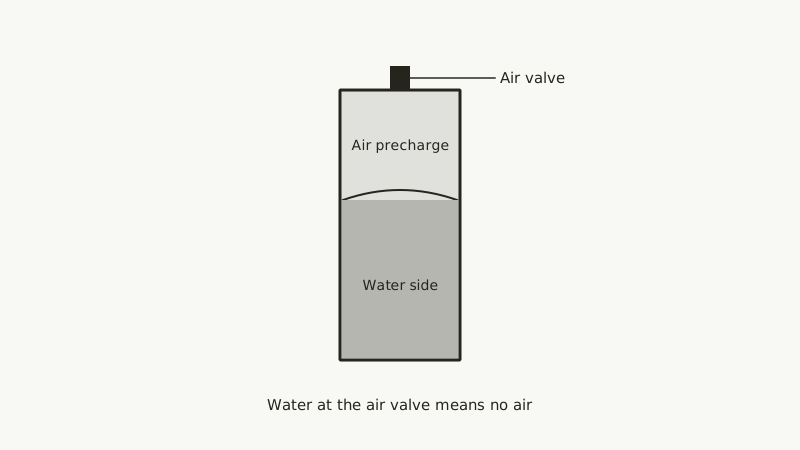
Watch for a relief valve that weeps, pressure surges whenever the burner kicks in, faucets and appliances that bang or whine, and a tank that seems packed with water when you rap on it. The quickest check is the little air valve: if water squirts out when the stem is pressed, the bladder has ruptured.
A fuller checklist:
- A dripping T&P valve. The relief valve is opening because pressure got too high. Do not plug it or remove it, which Long Beach code forbids.
- Knocking pipes. Surges can rattle lines, although several other things cause that too, which the water hammer guide sorts out.
- A heavy, dead-sounding tank. Knock on it. A good one sounds hollow high up and thuds only lower down. Thuds all over mean it is waterlogged.
- Weak spots. Failing flexible connectors, a leaking toilet fill valve or a dripping faucet can follow repeated pressure spikes.
Try the air valve test only on a cool system. Close the supply and bleed pressure at a faucet before touching the valve, and keep your face well back.
What should a replacement tank cost around Long Beach?
Published guides land at about $200 to $400 with a plumber doing the install, and the tank itself is a modest share. The figure grows if piping needs a new tee, a move, or a pressure regulator in the same visit. Take these numbers as orientation, since the written quote decides.
Factors that shift it:
- Tank size. Most homes use a small tank rated for the heater volume. A larger heater or higher pressure may need a bigger one.
- Access. A tight closet or a garage rack slows the work.
- Bundled jobs. An aging heater can be swapped together with the tank for less than two separate visits. See the replacement pricing page for that route.
- Pressure fix. If house pressure runs high, the plumber may recommend a regulator, which adds a part and labor.
Plumbers also check that the tank is precharged with air to match your static water pressure, since a tank set too low or too high will not do its job. That is one reason the swap is better done by a plumber than guessed at.
Does the code require an expansion tank, and does Long Beach inspect for it?
California's plumbing code requires thermal expansion control on closed systems, and municipal handouts quoting it say inspectors look for a tank when a replacement water heater is permitted. A residential water heater swap in Long Beach needs a plumbing permit, so the tank falls within what gets looked at. Ask the plumber to confirm how your supply is configured.
A few related rules Long Beach spells out for heaters: a cold water shutoff at the unit, earthquake strapping on every heater including electric models, and a relief valve discharge that ends within the allowed height range above ground. Pressure over 80 pounds per square inch is considered excessive in the plumbing code, and water heaters and other parts can suffer damage from it. If your reading is high, a regulator belongs on the list, and the pressure regulator replacement guide explains that part.
To read your own pressure, screw a pressure gauge to an outside hose bib while every fixture is idle. Readings near or beyond 80 psi mean it is time for professional help.
Can you replace an expansion tank yourself?
A handy owner can swap one in many cases, but the work involves shutting water, draining part of the system, sweating or threading a fitting and setting the air precharge. A leak at a joint is easy to create. Gas and electric heaters add risks, and a permit may be needed. Many owners hire a plumber for a part this small.
Anyone attempting it should close the cold inlet, cut the heater's fuel or power, bleed pressure at a faucet, and support the new tank, which hangs from its fitting and can strain it when full. A live electric heater is off limits, and the smell of gas means leaving immediately, then calling your gas utility from a safe spot outdoors: Long Beach Energy Resources, (562) 570-2140, in Long Beach and Signal Hill, or SoCalGas, 1-800-427-2200, in most neighboring cities. If anything else about the heater looks suspect, our water heater leak guide shows the common faults.
The quote form is the route to a visit, and the home page outlines our other work in the area.
Common questions
Is an expansion tank mandatory on every heater?
Not all. Only systems that are closed, meaning a pressure regulator, check valve or backflow device keeps expanded water from returning to the main, need one under the plumbing code. Many California homes have such a device, so most replacement permits involve a tank. The plumber can check how your supply is set up.
How can I confirm the tank is waterlogged?
With the system cool and depressurized, press the stem of the small valve at the top of the vessel. If water, not air, comes out, the bladder is finished. A tank that sounds dull all over when tapped, a dripping relief valve and pressure swings at the tap also point to failure.
How many years will a tank last?
No single number fits every tank. Bladders weaken with age, heat and pressure, and plumbers often suggest changing the tank when the heater is replaced. If your tank is old and the relief valve drips, treat the tank as suspect before blaming the valve.
Is a dripping relief valve caused by the expansion tank?
Often, yes. When the tank no longer absorbs expansion, pressure rises until the relief valve opens. High household pressure can do the same. Never cap or pull that valve; it exists for safety. Leave the diagnosis to a plumber, who can also check whether house pressure runs too high and whether the tank has lost its air charge.
References
- City of Escondido, Residential Water Heater Installations (quoting the California Plumbing Code, sections 504.6, 507.2, 608.2 and 608.3)
- City of Long Beach, mechanical, electrical and plumbing code requirements
- City of Long Beach, permit questions
- Published water heater valve and expansion tank cost guides from several consumer cost sites, checked November 2026
Updated