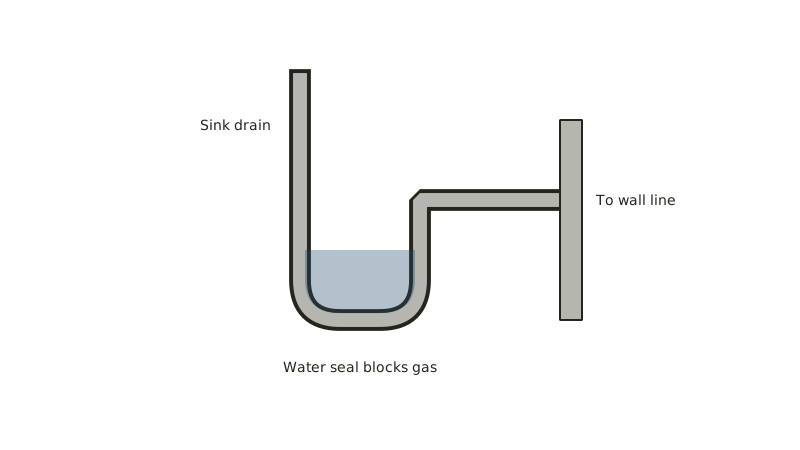
Walk the house and sniff each bathroom, the laundry, the kitchen and the garage floor drain. The room where the odor peaks is nearly always the room with the fault: a dry trap, a loose toilet, a cracked vent, or a damaged pipe below. Start with the cheap checks below, and if the smell is everywhere, jump to the sewer-line sections. Anything else around the house that needs a plumber is on the Harbor Lights home page.
What does the strongest-smelling spot tell me?
One fixture reeking while the rest are fine implicates that fixture's own trap, seal or vent. Odor in every room, or rising from several drains together, suggests trouble in the main line or yard. Sniff each drain, each toilet base and the cleanout cap outside, then write down which one wins.
Keep notes, since they save a plumber's time:
- Rarely used bathroom or floor drain: the water seal in the trap has probably evaporated.
- Base of a toilet: the wax seal or flange has given out, or the closet bolts are slack.
- Sink or tub only: a dried trap, a trap fitted with no vent behind it, or slime in the overflow.
- Whole house, or outside near the cleanout: the lateral or main run may be broken, sagging or blocked.
- Garage or laundry floor drain: typically a dry trap, since nobody runs water there.
Can I fix a dry trap or a loose toilet myself?
Yes for both, and they cause most household sewer odors. Pour a quart of water down any drain that has sat idle for weeks so the U-bend refills and blocks the gas. For a toilet that rocks, turn off the water at the stop valve, bail out the bowl, lift the fixture clear and set it back on a new wax ring.
Floor drains in garages and laundry rooms dry out fastest, because nothing refills them. Make a habit of pouring a jug of water into each one every month or two.
A toilet that is level and tight but still smells may be sitting on a flange recessed below the finished floor, something that follows a tile upgrade. A flange extender corrects that. A cracked flange, or a floor that gives underfoot, is the cue to hand the job over, since rot beneath a toilet is a structural issue as well as a smell.
Odor that vanishes for a day after flushing and then returns may be slime on the pipe walls or inside the overflow channel. The home methods in our shower drain guide work on those too.
Is sewer gas harmful to breathe?
Whiffs in a house are an irritant and a warning that a seal has opened, but the gas itself deserves respect. Sewer gas carries hydrogen sulfide, which the federal toxic-substances agency (ATSDR) describes as a rotten-egg-smelling gas. Years of low-level exposure irritate the eyes and can cause headaches and fatigue; far higher levels, well beyond an ordinary house, can cause collapse.
The point to remember: ATSDR reports that the nose stops detecting hydrogen sulfide after a few minutes at high concentrations, so no smell does not prove safety. Open windows, ventilate, and hunt for the source. Anyone who feels dizzy or sick, or whose headache lifts outdoors, should leave the room and get help.
Sewer gas and natural gas are different things, though utilities add an odorant to natural gas that smells alike. A sulfur odor next to a stove, furnace or water heater should be treated as a possible gas leak: everyone outside first, then the call. Long Beach Energy Resources serves Long Beach and Signal Hill, emergency line (562) 570-2140. SoCalGas, at 1-800-427-2200, supplies the neighboring cities. If anyone is in danger, call 911.
Why does the odor drift in and out, even on chilly nights?
An intermittent odor usually tracks water use rather than temperature. A trap loses its seal when a fixture sits idle, and a partly blocked vent lets a draining fixture pull the water out of a neighbor's trap. Which of those it is depends on what ran just beforehand.
No official source I could find ties cold weather to sewer odor, so I will not promise a seasonal cause. Instead, jot down what happened in the hour before each episode: a long shower, the washer draining, a toilet flush, rain. With that record, a plumber can tell a vent fault apart from a dried-out trap or a cracked lateral.
Odor right after heavy rain can mean water is entering a cracked lateral. Odor right after the washer drains often means the laundry standpipe or its trap.
What are the signs the buried line has failed?
Telling clues include a gurgling tub whenever a toilet flushes, water backing into the lowest fixture, soggy or unusually green yard strips over the pipe's route, and a smell outdoors that peaks at the cleanout. A camera inspection settles it, because the video shows roots, a sag, a crack or a shifted joint.
Bungalows from the 1920s in Belmont Shore and Bixby Knolls may still have clay or cast iron in the lateral, and bituminous fiber pipe (Orangeburg) is a known failure-prone material that turns up in some older sewers. I cannot say how many local homes have it, so let the camera show you what is down there.
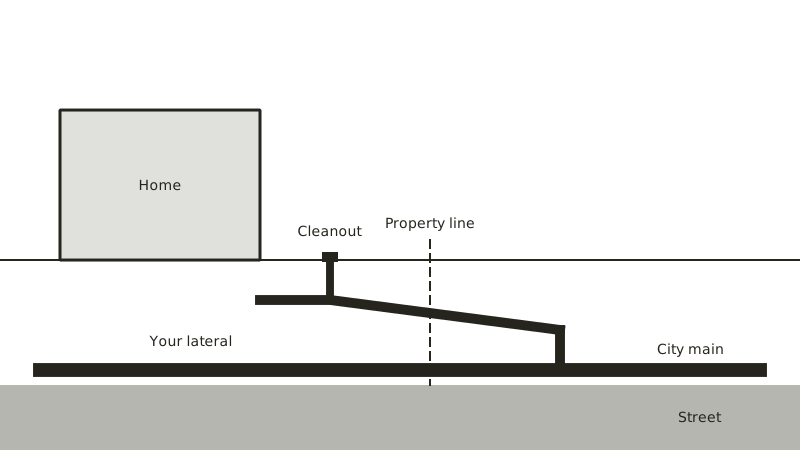
Finding the route: look for the cleanout, a capped pipe by the house or near the property line, and expect the line to head toward the street or alley. A plumber's locator can mark the path on the ground.
One fixture slow instead of the whole house is a different problem, and the page on slow sink drains covers it. For booking a visit about an odor, see the sewer smell page.
Who looks after which part of the sewer line in Long Beach?
The city's utility department looks after the main beneath the street. Your lateral, running from the building toward the property line, belongs to you. Per the city's sewer backup page, a blockage on the owner's side is the owner's to clear, and the department investigates once a camera shows a problem on city property.
For sewer and water emergencies the same page gives (562) 570-2390; check the number on the department's site before you dial. San Pedro and Wilmington belong to the City of Los Angeles, so those addresses deal with Los Angeles agencies, and the Long Beach arrangement above does not apply.
Here is the warning I would give any owner with a stubborn blockage: before a root-cutting cable goes down a lateral, the city advises a camera inspection to rule out a cross bore, which is a gas line that was bored through a sewer pipe. A cutter can sever it from the inside. Bubbles in standing water, hissing at a cleanout or a gas odor mean stay out and call the gas emergency line given earlier.
Does fixing a damaged sewer line always mean trenching the yard?
No. The repair follows the damage. A plug gets a cable or hydro jet. A hairline crack may be patched or relined. A collapsed or root-choked pipe may be replaced by trenching, or by a trenchless method: cured-in-place lining, or pipe bursting that drags new pipe along the old route.
Lining and bursting need small access pits at each end rather than a long trench, but not every pipe qualifies. Where the pipe has caved in, sagged badly or shifted a long way, digging may be unavoidable. The video decides, and any contractor worth hiring will show it to you and say why a method fits.
Get the method and the permit holder written into the price. In Long Beach a plumbing permit is needed when drain piping is installed or replaced; stopping a leak or a minor repair with no new material is exempt, and sewer work wholly inside the public right-of-way falls to Public Works or Utilities. Building and Safety answers permit questions at (562) 570-7648. On cost, the state expects a contractor license above $1,000, and the board's lookup is free.
Common questions
Is there a quick stop for the smell this afternoon?
Refill every unused drain with water, floor drains included, and let each tub and sink run for a minute. Press on each toilet to see if it rocks. Keep windows open and the bath fan on while you search. Fading within an hour points to a dry trap as the culprit.
Can breathing sewer odor make a person ill?
With prolonged exposure, possibly. At low levels hydrogen sulfide irritates the eyes and can bring headaches and tiredness. Dangerous concentrations are another matter, and a home with a plumbing fault rarely gets near them. Ventilate while the source is fixed, and see a doctor if symptoms linger.
Will bleach in the drain take the odor away?
It may mask the smell briefly, yet it leaves a dry trap, a tired wax seal or a cracked line exactly as they were. Mixing bleach with ammonia or an acid-based cleaner releases toxic gas, according to Poison Control. Repair the cause and skip the chemical shortcut.
Wait it out or book someone?
One smelly drain can wait while you refill the trap. Book help if the odor fills the house, drains back up, the smell returns within a day of refilling, or a gas line may cross the sewer. Ask for the cost in writing through the quote page before agreeing to dig.
References
- Long Beach Utilities, sewer backups and cross bore warning
- Long Beach Utilities, sewer system information
- ATSDR, Hydrogen Sulfide ToxFAQs
- Poison Control, chlorine gas facts (mixing cleaners)
- Long Beach Utilities, gas service and emergency line
- SoCalGas, natural gas leaks
- City of Long Beach, plumbing permit requirements
- California Contractors State License Board, hiring a contractor
Updated