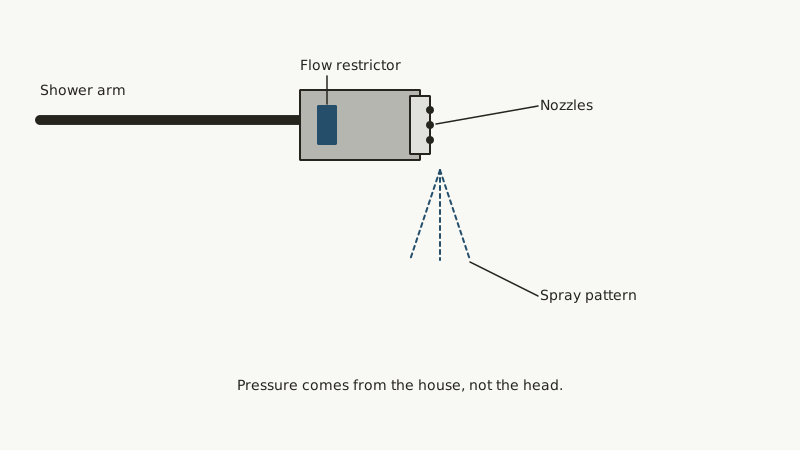
For a weak shower, pick a showerhead built for low pressure: a concentrated or pulsing spray, fine nozzles and a rated flow at or under California's limit. It will feel stronger without actually delivering more water. If the whole house is weak, or the shower suddenly got worse, a new head is a bandage, so open our section on low water pressure for the real diagnosis.
A few minutes of checking before you shop saves money. Plenty of "bad showerhead" complaints turn out to be scale, a failing valve or a regulator that has drifted.
Which features matter when pressure is weak?
Aim for a rated flow near 1.8 gallons per minute, spray settings that gather water into narrow streams, an aerating or air-injected design and nozzles that wipe clean. Skip any head promising huge flow, because the state limit is 1.8 gallons a minute, measured with the supply held at 80 psi, and skip models that need strong pressure to perform.
The ceiling sits in Title 20, section 1605.3 of the state's regulations: a head built on or after July 1, 2018 may flow no more than 1.8 gpm when tested at 80 psi, and a multi-nozzle head is judged on its combined flow. EPA WaterSense labels start at 2.0 gpm and the federal ceiling is 2.5 gpm, so some nationally advertised "high flow" products may not be sold in this state. Look for the gpm rating on the box or listing.
Beyond the rating, a handheld head on a hose lets you aim a narrow jet where you need it, and a head with visible, rubbery nozzles is easy to rub free of scale.
Will a new showerhead actually fix low water pressure?
Not if the pressure itself is low. A showerhead shapes and speeds up the water that reaches it, but it cannot add pressure to the line. If a new head helps, the old one was probably clogged with scale. If nothing improves, the shortfall is upstream: valve, pipe, regulator or water heater.
Test it. Unscrew the showerhead and run the shower with the arm bare. A strong stream says the head was the culprit. A weak stream says the cause is behind the wall. Then compare the tub spout, the other bathroom and a kitchen faucet. If every fixture is weak the trouble reaches the whole house, which we cover in why water pressure drops.
Only the shower is weak. Why?
One weak shower tends to mean a clogged head, a half-closed shower stop, a worn cartridge, a kinked flexible hose or a restricted branch pipe. Weakness limited to hot water suggests the heater side. Mineral scale is a frequent culprit where water is hard.
Begin with cheap fixes. Soak the head following the maker's instructions, confirm that the stops at the shower valve are fully open, and check whether the tub diverter is sticking. More causes are listed under low shower pressure, and dissolving hard water scale explains the build-up.
Could the house pressure be the problem?
Quite possibly. Screw a gauge onto an outdoor spigot and read it. Past 80 psi the California plumbing code wants a regulator on the line, and a common target for indoor pressure is somewhere around 50 to 60 psi. A failing regulator can drop pressure to a trickle, and a partly closed main valve can do the same.
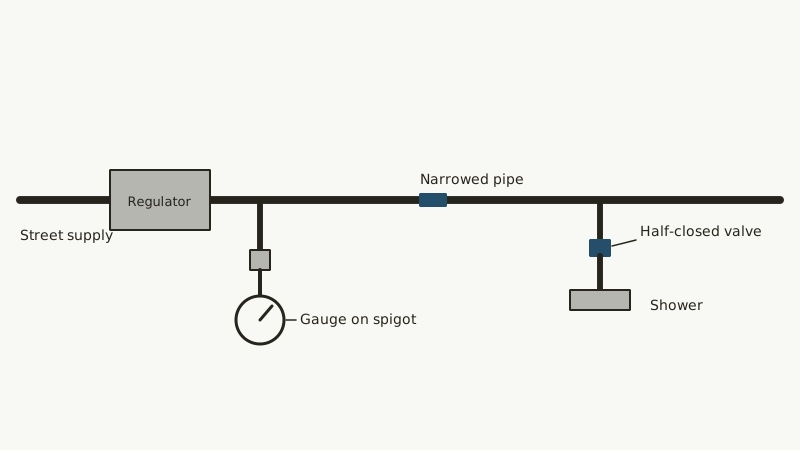
If the gauge reads low, the fix may be to adjust or replace the regulator, open a half-closed valve, or deal with corroded pipe. The pages on adjusting a regulator and regulator installation cost explain both. In older Long Beach homes, galvanized supply lines can fill with internal build-up over decades and choke the flow, a separate matter from the showerhead.
What mistakes do people make when shopping for a low-pressure showerhead?
The common ones: buying on the words "high pressure" without checking the gpm rating, drilling out or removing the flow restrictor, expecting a head to cure a house-wide problem, and buying a head that does not fit the thread on the shower arm. The restrictor keeps the head under the legal flow, and taking it out does nothing about where the pressure goes missing.
Keep the old head until you are sure the new one helps. Wrap the threads with a few turns of plumber's tape, tighten by hand, then finish with a light quarter turn, a cloth around the wrench to protect the plating.
When is it smarter to hire a plumber?
Ring one if pressure fell suddenly across the house, if walls turn damp or the water bill climbs, if the meter turns while everything is off, if scale clogs several fixtures, or if a new showerhead changed nothing. Those patterns point to pipes, valves or the regulator rather than a clogged nozzle.
A plumber can read pressure with a gauge, inspect the valve and cartridge, and say whether the regulator, the lines or the supply is at fault. Long Beach requires a plumbing permit for work beyond minor repairs made without new materials, while most plumbing jobs in California need a contractor license, which the licensing board lets you verify online. San Pedro and Wilmington use LADBS. The quote form is where to describe what is happening.
Common questions
How fast can I improve the shower?
A showerhead swap is a ten-minute job needing only a wrench and thread tape. Descaling is an hour or so of soaking. A regulator or valve repair means a plumber visit of one to several hours, and pipe trouble runs longer. Estimates become reliable after the cause is found.
Which questions come first with a low-pressure call?
Confirm the plumber reads the pressure first. Then ask what the price takes in and how a bigger-than-expected cause would change it, and bring up permits for any regulator work. The licensing board's site verifies a contractor, and the figures belong on paper before work begins.
Is someone required at home for the diagnosis?
It helps: the plumber will want to see the shower, test other fixtures and locate the main valve and regulator. If you are away, send someone you trust and stay reachable. Say which fixtures are weak and when it began.
This guide is one of many on plumber across Long Beach.
References
Updated