For most homes in Southern California, PEX is the cheaper repipe and the quicker one, and copper is the pick when you want the longest record or the pipes will sit in sunlight. Still deciding whether to replace every line? Read the repiping overview first, then return here to settle the material.
Which pipe is better for a whole-house repipe, PEX or copper?
PEX wins on price, speed and flexibility, since it bends through walls with fewer joints and usually means less drywall cutting. Copper wins on track record, heat tolerance and resistance to sunlight and rodents. Neither is wrong. The better choice depends on your budget, your water and how exposed the pipe will be.
Here is a plain side-by-side:
| Factor | PEX | Copper |
|---|---|---|
| Material cost per foot (guide) | about $0.50 to $2 | about $2 to $8 |
| Whole-house repipe (guide) | about four to ten thousand dollars | about eight to fifteen thousand dollars |
| Typical lifespan estimates | four to five decades, sometimes longer | five to seven decades |
| Joints | few, using fittings and rings | many, soldered or brazed |
| Sunlight | degrades if left exposed | unaffected |
| Rodents | can be gnawed | resistant |
| Pinhole leak risk in aggressive water | low | present |
Every range above is drawn from published guides, not from a Harbor Lights bid, so treat it as orientation and lean on the plumber's written number.
How much do PEX and copper cost to install?
Published guides put PEX tubing at roughly $0.50 to $2 per foot and copper at roughly $2 to $8, yet wages dominate the invoice, and PEX takes fewer hours. According to those guides, a whole-house job lands near $4,000 through $10,000 for PEX versus $8,000 to $15,000 for copper. Patching, permits and awkward access can shrink the difference.
Three things move the total: the size of the house, how many fixtures and floors are involved, and how much wall has to come apart. A one-story postwar tract house in Lakewood is simpler to run than a two-story Craftsman in Belmont Shore with plaster walls. The repipe cost page breaks down permits, patching and bathroom counts.
What is the expected service life of each, and what is hiding in older walls?
Cost guides generally credit copper with five to seven decades and PEX with four to five, though some sources stretch PEX higher. Neither figure is a promise, since water chemistry, pressure and installation quality matter as much as the material. Older homes near the harbor often still hold galvanized steel from the 1920s to 1950s, which fails far sooner than either.
A few notes on what sits in older walls:
- Galvanized steel corrodes internally, narrowing the bore until flow suffers. The galvanized replacement guide covers the signs.
- Copper that was thin to begin with can develop pinhole leaks. Repipe contractors in Southern California often blame aggressive, treated water, though that claim comes from firms that sell repipes, so ask your water supplier for its quality report before assuming. See copper pinhole leaks.
- Polybutylene, a gray plastic installed from about 1978 to the late 1990s, is a candidate for replacement. See the polybutylene guide.
If you have had one pinhole, a second usually follows, which is the point at which repiping beats patching.
Is PEX allowed in California, and what does Long Beach require?
Yes. Following an environmental review, the state signed off on PEX for drinking water systems, and it is now permitted in residences and commercial buildings. Long Beach also spells out its own rules: copper type L or heavier is allowed everywhere, below-slab copper joints must be brazed, and PVC water lines are not approved under or within buildings.
So the comparison with PVC is short: PVC and CPVC are not the plan for supply lines inside a Long Beach home. Check with the City of Long Beach Building and Safety office before assuming any material is accepted for your project, because rules change by city and by code cycle. Any repipe means a plumbing permit plus inspection, and the crew doing it must carry a California contractor license.
What about flow, size and cold weather?
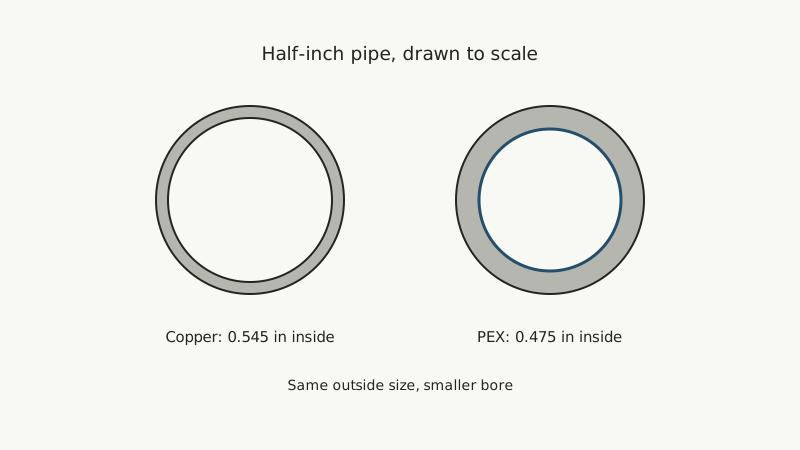
Pipe for pipe at one nominal size, PEX is slightly narrower inside. Half-inch PEX measures about 0.475 inch across versus about 0.545 for half-inch Type L copper, but it has fewer fittings and smoother walls, and a PPI and NAHB study found both met demand at the farthest fixture. Some plumbers step up one size on long runs.
Cold weather barely matters in Long Beach. PEX tolerates a freeze better because it expands and recovers, while copper cracks, but the coast rarely sees hard freezes. Where it does matter is inland garages and attic runs, or when you travel.
Fittings also deserve a word. PEX joins with either copper crimp rings or stainless cinch clamps, which are quicker in tight spaces and harder to remove. The choice rarely affects you, but it tells you the installer has a plan.
Which should you choose for your own house?
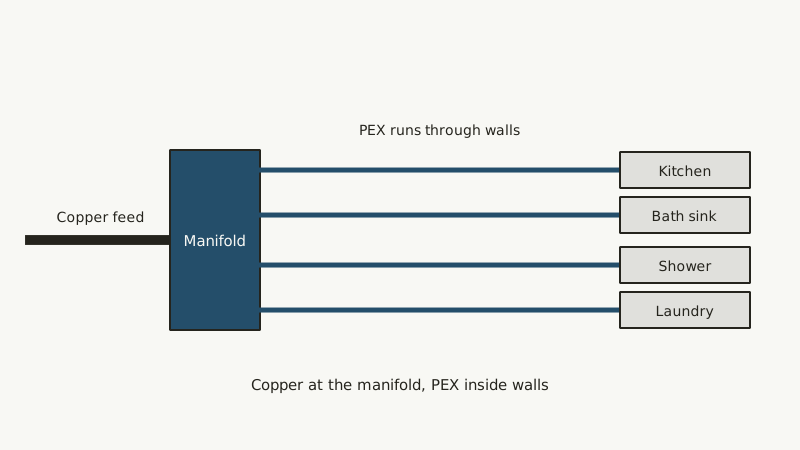
Choose PEX when budget and speed lead, the pipes will hide inside walls, and you want fewer holes in the plaster. Choose copper when you want the longest record, the pipe runs outdoors or through hot attic spaces, or the plumber has found a code reason. Many contractors mix them, with copper at the exposed manifold and PEX through the walls.
To see actual numbers for your layout, request a quote and ask for both materials priced line by line. More of what we arrange around Long Beach sits on the front page. If you decide on PEX, the PEX repipe walkthrough shows the steps in order.
Common questions
Should a repipe use PEX or copper?
PEX for the majority of houses, on price and fewer wall openings. Copper makes sense where pipe sits in sun or heat, or when a buyer or insurer asks for it. Have the plumber price both, then weigh the difference against the years you expect to remain in the house.
Does PEX reduce water pressure compared with copper?
Not in a way most homeowners notice. The bore of PEX is marginally smaller at a given size, though the tubing has fewer joints and slicker walls, so research found both pipes satisfy fixture demand. Long runs or many bathrooms may call for a larger PEX size, which the plumber calculates from your layout.
Can PEX go outside or underground?
Only with care. Sunlight breaks it down, and each product has its own limit on exposure time, so keep it covered during and after installation. Where PEX runs in soil, California requires a sleeve approved for the job. Many plumbers use copper for exposed outdoor stretches and keep PEX inside.
Does PEX or copper cause water to taste different?
Some people notice a faint plastic taste in new PEX for the first weeks. It usually fades after flushing the lines. Copper can leave a metallic note in standing water. If taste worries you, mention it to the plumber, who can suggest flushing steps or a particular product.
References
- Contractor Magazine, California approves PEX for state plumbing code
- City of Long Beach, mechanical, electrical and plumbing code requirements
- Plastics Pipe Institute and NAHB Research Center, PEX and copper fixture flow comparison
- Published whole-house repipe cost guides from several plumbing and cost sites, checked November 2026
Updated