Is PEX allowed for repiping in this state?
It is. California approved PEX for drinking water around 2009 to 2010, with conditions, and it is widely used for repiping in Southern California. Contractors must certify compliance before a permit is issued, the pipe must carry at least 30 days of UV protection, and flushing and tagging rules apply, with a lighter regime for replacement piping. The wider repipe decision is on the repipe house page.
Claims that PEX is banned in California are out of date. Some cities and agencies add local rules, so the permit office is the place to confirm. In Long Beach, that is the city's building office, and your contractor normally applies for the permit. For the bigger picture of when and why to replace a home's pipes, the repipe house page lays out the decision, while this page looks at the PEX method alone.
How does a PEX repipe go, from start to finish?
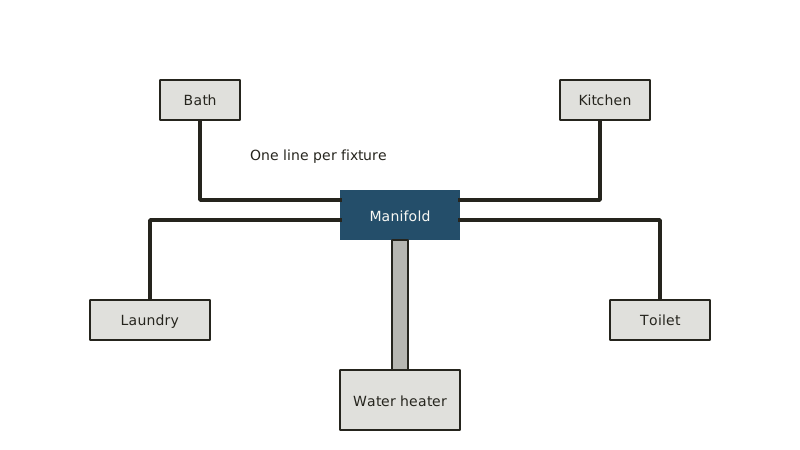
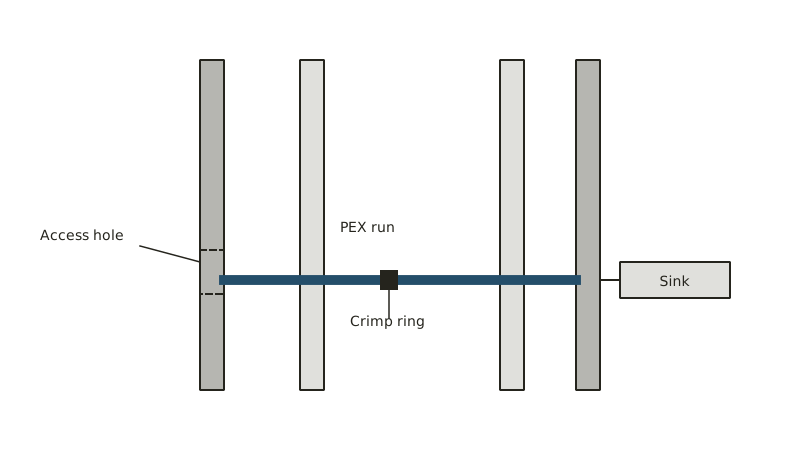
The installer opens small access holes in walls, ceilings or the attic, shuts off water, runs new PEX from a manifold or branch to each fixture, connects to the main and water heater, tests the system under pressure, flushes it, and patches the openings. Most houses need two to four days, and the taps are dry for part of it.
The sequence a plumber follows:
- Walk-through and plan. Count fixtures, find the main, and choose manifold or branch layout.
- Permit. The contractor applies for it before work starts.
- Shutoff and drain. Water is off while old lines are disconnected.
- Access. Small holes are cut where needed, often in closets, attics or crawlspaces, and old pipe is capped or abandoned.
- New runs. PEX tubing is pulled, supported and connected to fittings, crimp rings, clamp rings or expansion fittings, depending on the PEX type.
- Water heater and main. New piping ties in at the heater, with connections done as the code and the heater's maker require.
- Pressure test and flush. The system is tested and flushed. The state's two-flush, week-long tagging schedule is written for new construction, and replacement of an existing system is exempt, so ask the contractor and the permit office what applies.
- Inspection and patching. The inspector signs off, then drywall and paint are repaired, which some quotes include and some do not.
The flexibility of PEX lets plumbers snake it through walls with fewer holes than rigid copper, which is a main reason repipes with PEX are less disruptive. PEX vs copper compares the two, and PEX A or B explains the types.
What should a PEX repipe cost around Southern California?
Regional contractor price guides land from $4,000 up to $10,000 for a standard one to three bathroom house. Bigger homes, tight access and wall repair push quotes toward $10,000 to $18,000 and beyond. Nationally, Angi lists an average near $7,500, with PEX tubing itself at $0.40 to $2 per foot and labor around 70 percent of the total.
| House or factor | Guide range |
|---|---|
| 1 bath | $3,500-$6,500 |
| 2 bath | $4,000-$8,000 |
| 3 bath | $6,000-$10,500 |
| 4 bath and larger | $8,000-$14,000 and up |
| Difficult access, larger home, repair included | $10,000-$18,000 or more |
Treat these as guides rather than Long Beach quotes. Permit fees, wall and ceiling repair, water heater work and a slab versus raised foundation all change the result. Copper typically costs about twice as much as PEX in the same published guides. More pricing detail is in repipe house cost and in what it costs to re-plumb an old house.
Ask every bidder whether permit fees are in the price, along with drywall and paint, patching a plaster wall, water heater connection and cleanup, and how the number changes if a wall holds a surprise.
Is PEX a good choice for an older Long Beach house?
Often yes. Many houses in Belmont Shore, Bixby Knolls, Naples and the Harbor area were built in the 1920s to 1950s and carry galvanized steel that has corroded and narrowed, or copper that has pinholed. PEX does not rust or scale, and it handles small shifts. It is not suited to long outdoor sun exposure.
Whether to repipe at all depends on symptoms: rust-colored water, falling pressure, frequent leaks, pinholes in copper or a known problem pipe such as polybutylene. Background reading: replacing galvanized pipe and polybutylene replacement. Hard water scale from the supply does not form inside PEX the way it does in metal, and the city water quality report gives your supplier's hardness figure.
Plastic has limits. Keep PEX out of direct sunlight, away from heat sources such as flues and recessed lights, and protect it from rodents and from solvent contact. Many contractors use PEX inside walls and copper where pipe is exposed outdoors. If your house has a slab leak, a repipe may route new lines overhead instead of under concrete, and slab leaks and repipes weighs that choice.
Is a do-it-yourself PEX repipe realistic?
Some homeowners try it, and PEX is friendlier than copper, though a whole-house repipe is major work with permit and inspection rules. A contractor license is mandatory from $1,000 of work, with narrow exceptions. Ask Long Beach Building and Safety what applies to work you would do on your own home.
If you plan to learn as you go, know the pitfalls. Wrong fittings, tubing unsupported over long spans, kinks, missed pressure tests and poor heater connections are the classic mistakes, and a hidden joint failure inside a wall is costly. Manufacturer instructions matter: crimp, clamp and expansion systems use different tools and are not interchangeable. An inspector will want the work to pass a pressure test.
For most owners the sensible split is a contractor for the repipe itself, and, if the quote allows, the patching and painting done by the owner. Gas piping is regulated work whatever the pipe material, and gas plumbing rules cover where DIY ends.
What should you ask before hiring a repipe contractor?
Collect the license number, the scope and price in writing, who handles permit and inspection, which PEX brand and type goes in, how walls and ceilings are restored, the length of the shutoff and what any warranty covers. Compare at least two quotes line by line, not by the bottom number alone.
Good questions also include how the contractor will flush and test the system, whether the water heater connection is included and how they protect furniture and floors. The state caps any deposit at the smaller of $1,000 or ten percent of the job.
Tell us about the house on the quote form: its age, current pipe material, bathroom count, symptoms and foundation type. A local plumber is arranged, and a written figure before work before work. We read requests on weekdays, 9am to 5pm. See the Harbor Lights home page for how a visit works.
Common questions
Is repiping better than leaving the old pipes in?
Repipe when leaks keep returning, pipes are galvanized or polybutylene, water runs brown, pressure falls or pinholes appear in copper. Leave sound pipes alone. A plumber can inspect, measure pressure and say whether the answer is a repair or a repipe. Compare more than one quote.
How many days is the water off?
Most houses take two to four days with the water off for part of the time, depending on size, access and the number of bathrooms. A small one-bath may be faster. Add time for inspection and for wall and paint repair, which may be a separate trade.
Can PEX carry drinking water safely?
The California Plumbing Code approves PEX for potable water, and approved products are tested to drinking water standards. Follow any flushing steps the contractor and permit office require after installation. If you have concerns about taste or odor, ask the contractor which brand and type is used and look for the approval marks printed on the tubing.
Is a permit needed for the work?
Yes. A repipe is permitted work, and California requires contractors to certify PEX compliance before a permit is issued, with inspectors confirming it. Check that the quote includes both permit and inspection, and hold on to the final sign-off paperwork for any future sale of the house.
Does PEX affect water pressure or taste?
PEX has a smooth interior, and a correctly sized system often improves flow compared with old galvanized pipe. Sizing and layout decide the result. A new system can have a slight plastic smell at first, which flushing normally clears. Report anything that persists.
References
- Published whole-house repipe price guides from Southern California contractors and Angi, checked November 2026
- California Pipe Trades, PEX approval, flushing, tagging and 30-day UV rules in California
- Contractors State License Board, hire a contractor
- Long Beach Utilities, annual water quality report
Updated