Polybutylene, nicknamed poly-B or PB, is a plastic water pipe that went into millions of North American houses from about 1978 until the mid-1990s. Chlorinated water attacks it from the inside, so it can burst with no warning. The lasting fix is a full whole-house repipe, usually in PEX or copper. This page helps you confirm what you have and plan the job.
Is my house plumbed with polybutylene?
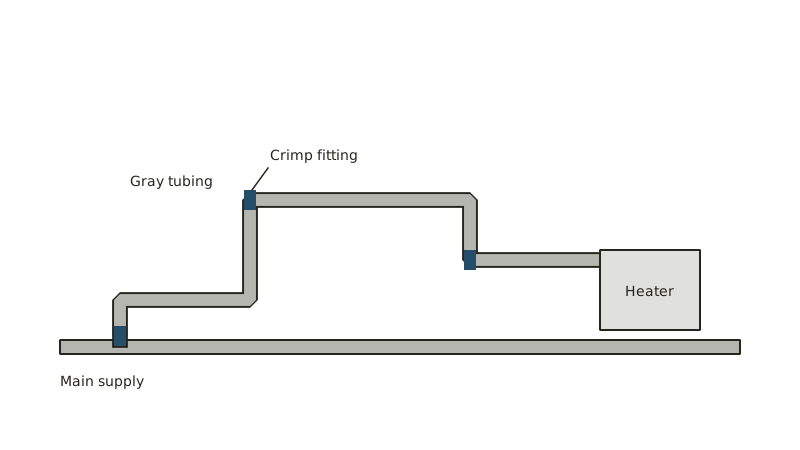
Inspect whatever is visible near the heater, below sinks, inside the garage and along the main supply. Poly-B is flexible plastic tubing, frequently gray but sometimes blue or black, and many lengths carry a "PB" stamp with a code. Copper and stiff white or cream pipe are different materials. A plumber can settle any doubt quickly.
A few clues help:
- Era. Suspect houses built, or repiped, from the end of the 1970s into the mid-1990s. In Long Beach that points to condominiums, townhomes and houses from that period more than the 1920s bungalows of Belmont Shore or the postwar tract homes of Lakewood, though older houses may have been repiped in those decades.
- Layout. Poly-B often leaves the main, passes the heater and branches to each fixture, with crimp rings at the joints.
- Fittings. Expect plastic (acetal) or copper crimp fittings in place of soldered joints.
Check the inspection report or the home's repair history too. A seller's disclosure may name the pipe. If you only see copper at fixtures, remember that plastic may hide in walls and under the slab.
Why does polybutylene fail, and how worried should I be?
Water suppliers add chlorine or chloramine to keep drinking water safe, and those chemicals slowly attack the pipe's inner structure. Stress at fittings, bends and kinks hurries the damage. Failure may arrive within a few years or wait for decades, and since the harm is internal, a leak or burst can come with no visible warning.
That unpredictability is the real reason owners replace it. A pinhole in a pipe running through a wall can soak drywall and flooring for days. Because water chemistry differs, some houses see problems early and others never do, but nobody can promise yours is safe. Building codes in the US no longer accept polybutylene for water supply.
A leak already showing? Shut the main valve at once, then turn to help with leaks or the burst pipe guide.
What will getting rid of the poly-B cost?
Whole-house repipe estimates in the guides we read begin near $1,500 and top out around $15,000, with one placing a two-bedroom, one-bath home near $4,500 and larger properties near the top of the range. Labor takes the biggest share, and wall and floor repair can add roughly $500 to $3,000. These come from other publishers, never from a quote of ours.
What moves the price:
- Size. Extra bathrooms, fixtures and stories bring more pipe and more wall to open.
- Material. PEX is the most affordable and common replacement, CPVC is also inexpensive, and copper costs the most.
- Access. A slab-on-grade bungalow is easier than a two-story home with finished plaster.
- Repairs afterward. Drywall, paint and flooring are sometimes priced separately.
- Permit and inspection. Altering or replacing piping calls for a City of Long Beach plumbing permit, and the contractor normally files it.
For deeper numbers see the repipe cost page; for the material choice, PEX versus copper. If you want to see how the job runs, read how to repipe a house or repipe with PEX.
Do I have to replace it, and what about insurance and selling?
No law forces an owner in California to replace it, but it affects insurance and sales. Some insurers surcharge or decline homes with polybutylene, and buyers commonly push for a price cut or a credit matching the repipe estimate. Disclosure rules for sellers apply, so check yours with a real estate professional.
One repipe company reports premiums for homes with poly pipes rising above the cost of a repipe, but that is a company claim and policies differ widely. Call your own insurer and ask what it requires, and see burst pipe insurance coverage for what water damage policies often exclude.
Leaks that come from gradual deterioration are often treated differently from sudden bursts by insurers, and we cannot judge your policy. About the old class action: a large settlement was reached years ago, and we did not find a current repair fund. A lawyer is the right person to ask about any claim.
How should I plan the work?
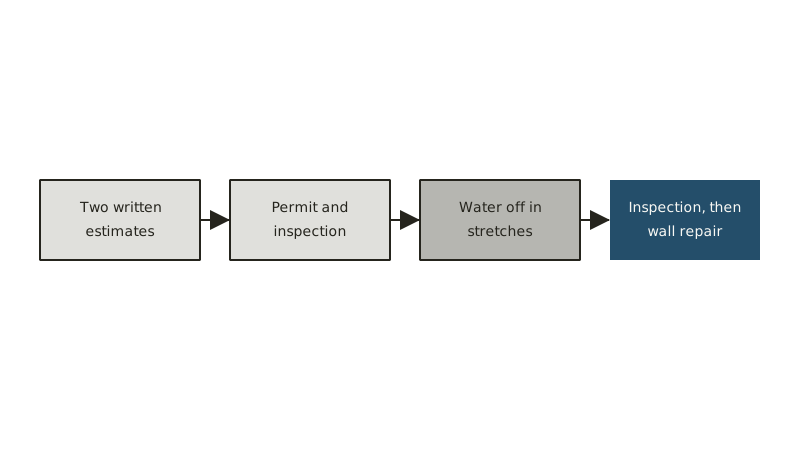
Collect two or more written estimates naming the material, the fixture count, the permit holder, the wall repair plan and the schedule. A repipe usually means water off for part of a day, and some jobs take several days. Ask how the plumber protects floors and where holes will go.
Confirm the contractor's standing with the state licensing board; a repipe is far above the dollar threshold that triggers the license requirement. Get a written contract, and keep any deposit small and documented.
Sequence matters. Replace the supply lines, test under pressure, get the City inspection, then patch walls. Planning a new heater or a softener? Bundling them with the repipe saves labor. Some older homes mix poly-B with galvanized steel, which is covered under galvanized pipe replacement.
Common questions
What is the crew's schedule inside the house?
An average house is commonly one to a few days of plumbing, with the water off for stretches each day, then inspection and wall repair. Big or two-story houses run longer. The estimate should include a schedule and say when you will lack water.
Which questions screen out a poor repipe bid?
Request the contractor's license number, check it yourself, then ask about the pipe material, who files the permit, how walls get repaired, the warranty on the labor, and whether the estimate lists every fixture. Keep the price in writing from day one.
Must I stay at the house?
Be there on the first and last days, and whenever a room must be reached, because walls are opened and the supply interrupted. Clear the work zones, tuck away valuables, and plan for stretches without water for bathing, cooking and the toilet.
Is a partial replacement an option?
Sometimes, but it is a compromise. Replacing the section that leaked fixes that spot, while other stretches keep aging. Many plumbers advise a full repipe because mixed systems still carry failure risk at every polybutylene fitting. Ask for both prices and decide with the numbers in hand.
This guide is one of many on plumber long beach.
References
- Wikipedia, Polybutylene
- City of Long Beach, plumbing permit requirements
- California Contractors State License Board, hiring a contractor
- Published polybutylene repipe cost guides from several plumbing and cost sites, checked November 2026
Updated