A ceiling stain, bubble or sag means water has gathered in the space above it and found a way through. The visible patch is only part of the story: the water traveled along framing before it showed, so the source is often a few feet from the mark. Stop the supply, keep everyone away from beneath a bulge, and get a plumber to trace the leak, because patching the ceiling first just hides a problem that keeps wetting the structure. The wider picture of finding and fixing leaks sits on our leaks page; this guide covers the ceiling itself.
How do I judge how bad the damage is?
Read the surface. A faint tan ring with a dry ceiling is an old or intermittent leak. A damp, darkening stain with a soft feel is active. Paint that bubbles means water is pooled behind it. A visible sag or belly means a lot of water is trapped and the board may fall, so keep clear and treat it as urgent.
Press nothing yet. Look at the shape: a stain below a bathroom hints at a tub, shower or toilet seal. A line along a wall points to a pipe or a roof edge. A spot beside a vent or around a light fixture can be condensation, an HVAC drain or a leak that has run along a joist. A stain that returns after drying out is the sign of a repeated leak. Our guides on ceiling water leaks and on water spots with no obvious leak help with the odd cases. Many houses built before the 1950s in Long Beach have plaster over wood lath instead of drywall, which tends to crack and drop in chunks as it soaks, so be extra careful beneath it.
What are the right moves in the first sixty minutes?
Close the valve feeding the suspected source, or the main, then turn to electricity and people. Where water has reached a light or fan, kill that circuit at the panel rather than touching the switch. Clear belongings, set out buckets, take pictures, and phone a plumber.
Order matters:
- Stop the water. Close the main valve at the meter or the house when you cannot tell which line is leaking.
- Mind the power. A stain around a fixture, or drips near outlets, means turning off that breaker while standing somewhere dry.
- Keep clear. Stay out from under a bulge. A saturated board can drop without warning.
- Protect the room. Move furniture and electronics, lay plastic, and put a bucket under any drip.
- Document. Photograph the stain, the room and any damaged belongings before you touch things.
- Call. The plumber first; the insurer too when the damage is substantial.
If a large bulge is full of water, a pro may release it under control rather than letting it burst. Do not poke it yourself unless you can stand clear of the whole area, and never do it near a light fixture. Our short guide on who to call for a ceiling leak explains whether it is a plumber, a roofer or an HVAC technician.
Where does the water usually come from?
Most ceiling leaks start in a bathroom or kitchen above: a failed shower pan, a worn toilet seal, a weeping supply line or a drain connection. After that come the roof, an air conditioner condensate line and pipes in the attic.
Tracing it is plumbing work. The plumber looks at fixtures above the stain, checks supply and drain lines, and may run a water meter test: shut off everything, read the meter, and read it again after two hours, as Long Beach Utilities describes. A moving dial means a pressurized line is leaking. If nothing moves, the source is more likely a drain, a fixture that leaks only when used, or the roof in rainy weather. Moisture meters and thermal cameras help locate water without opening the ceiling. If the stain is below a bath, our piece on leak detection cost explains what the search can cost.
Can the ceiling be patched, or does it have to come down?
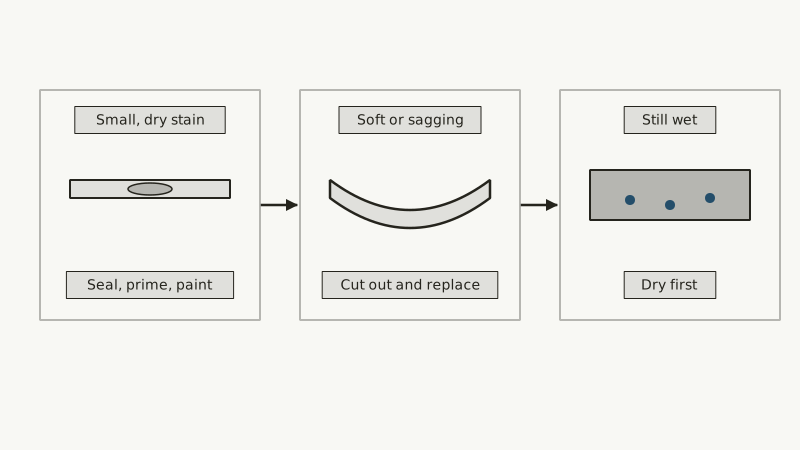
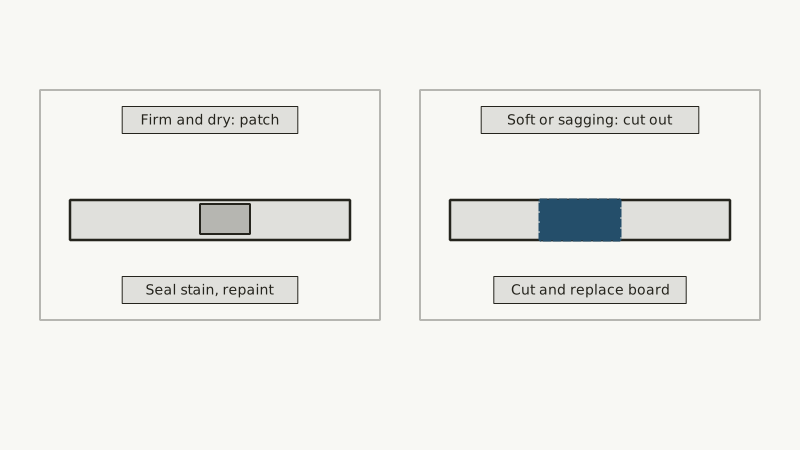
A small stain on a dry, firm ceiling can usually be sealed with stain-blocking primer and repainted. Drywall that is soft, sagging, bubbled or cracked should be cut away and replaced, because wet board loses strength and can grow mold. Plaster that has gone soft or pulled from the lath also comes down. Repair is the last step, after the leak is stopped and everything is dry.
Dry first. The EPA says to fix water problems quickly and dry all items completely, because mold grows the longer moisture lingers. Box fans, open windows and a dehumidifier help, and a restoration company brings stronger drying gear. Insulation above that has been soaked may need replacing. Only then does a drywall finisher patch, texture and paint. Thumbtack's April 2026 drywall guide gives about $294 to $920 nationally with most people paying near $515, a 3-foot ceiling crack at about $150, and notes that leak damage may also need plumber, roofer or remediation work, which adds to the total.
Is mold or asbestos a concern in a wet ceiling?
Mold can be, and asbestos might be in an older house. The EPA says mold can grow into porous materials such as ceiling tiles and may be impossible to remove fully, and that a professional makes sense when mold spreads past roughly a 3-by-3-foot patch, or when the water was contaminated. Asbestos matters if the ceiling is old, textured or sprayed.
Houses built before the 1980s sometimes have asbestos in textured paint, ceiling material or insulation; the EPA's list of common home locations includes textured paint, and it says exposure happens when material is disturbed or damaged. You cannot tell by looking. Before scraping, sanding or tearing out a popcorn or textured ceiling in an older home, have a sample tested by an accredited professional. If it contains asbestos, removal belongs to trained specialists. Bagging damaged texture yourself is a poor idea. Water from a sewer backup or an overflowing toilet counts as contaminated, so bring in a professional.
What will it cost, and will insurance help?
Plumbing, drying and drywall are separate costs. A plumbing repair for a leaking pipe runs about $228 to $752 in Thumbtack's national April 2026 figures, while the ceiling patch is priced separately and mold or restoration work adds more. Insurance generally covers sudden and accidental damage and generally excludes gradual leaks, according to the California Department of Insurance.
Phone the insurer before repairs begin, photograph everything, and hold on to receipts. Save any damaged materials the adjuster may want to see. The steps of a claim appear in insurance and a burst pipe, and a plumber's written invoice that names the cause is the paper adjusters value. For a plumber visit, request a quote and the price comes in writing. Everything else we set up is on the Harbor Lights home page.
Common questions
How long before a damp ceiling becomes a bigger problem?
Not long. Stop the water at once, because soaked board weakens and mold needs only continued moisture. The EPA stresses prompt drying. A ceiling that has stopped dripping but is still damp should be dried and checked quickly, not left to dry on its own for weeks. A visible sag cannot wait at all.
Is painting over a water stain a good idea?
Only once the source is fixed and the surface has dried through. Paint over a damp stain traps moisture, and the mark usually bleeds back through ordinary paint. A stain-blocking primer helps on a dry, sound surface. If the board is soft or sagging, it needs replacing, not painting.
Is the room below a stained ceiling safe to use?
If the ceiling is firm, dry and not sagging, usually yes, but keep clear of any soft or bulging section, and stay away from light fixtures that were wet. If water reached the wiring, have it checked before use. When in doubt, close the room until a plumber or an electrician looks.
What if the water is coming through the roof?
A roofer takes over a roof leak, and an air conditioner drain line belongs to an HVAC technician. A plumber fits when the water is clean, active and tied to fixtures or pipes overhead, or when nothing outside explains it. A plumber can rule pipes in or out, which narrows the search.
References
- U.S. EPA, Mold Cleanup in Your Home
- U.S. EPA, Learn About Asbestos
- Thumbtack, pipe repair cost guide (updated April 2026)
- Thumbtack, drywall repair cost guide (updated April 2026)
- California Department of Insurance, residential insurance guide
- Long Beach Utilities, high water bills and contact numbers
- City of Long Beach, plumbing permit requirements
Updated