A brown stain spreading overhead, a bulge in the drywall, a steady drip onto the carpet: the first instinct is to phone a plumber, and sometimes that is correct. It is also wrong about as often, because ceilings get wet from five different directions. Before you pick a number, spend ten minutes on the checklist below. For other water escapes around the house, the leaks overview explains how a plumber approaches them, and the call you need may turn out to be someone else entirely.
What is the right opening move once water starts dripping from above?
Protect people and power before you worry about the plaster. Stay out from under the wet patch, flip the breaker for any room where a light or outlet is damp, put out buckets, and shut the main if a pipe looks likely. Take dated photos of everything; the notes in ceiling water damage show what to record. Only then pick whom to ring.
A swollen ceiling holds a pool of water, and gravity will win. Some people prick the sagging belly of the bulge with a screwdriver to let it drain into a bucket, standing to the side while they do it. That prevents a larger collapse but leaves a hole to patch, so only do it if the bulge is large and you are sure no wiring is close.
Is the water from a pipe, the roof, the A/C or a neighbor?
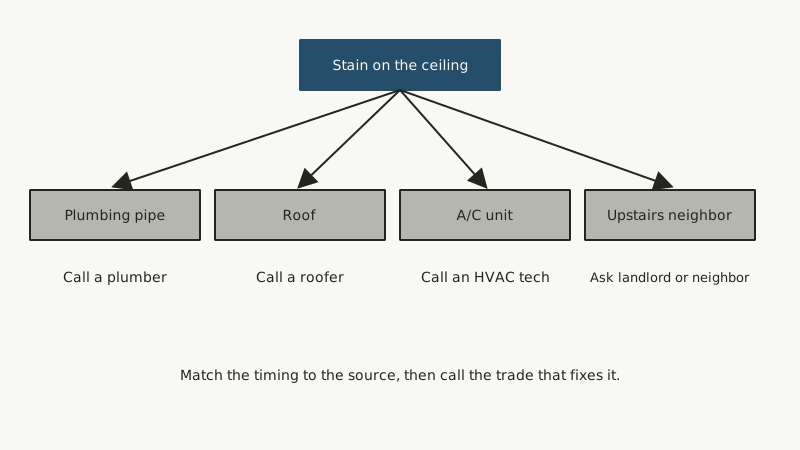
Match the timing to the source. Water that appears only during or after rain points to the roof. Water that shows up when someone upstairs showers, runs a tub or flushes points to a drain or supply line. A stain that grows on hot afternoons suggests an air-conditioning drain. Constant water that does not change with weather or use points to a pressurized supply line.
A single test isolates supply pipes. With all fixtures shut, check the meter; if its dial creeps, water is escaping on your private side, and a plumber's leak detection equipment can trace it without opening the entire ceiling. A still dial favors rain, condensation or a drain, and other ceiling leak causes are covered on their own page.
Which tradesperson matches which source?
A plumber for supply lines, drains, tubs, showers, water heaters and toilets; a roofer for rain-linked leaks; an HVAC company for a clogged or overflowing condensate line or a drain pan; a landlord, property manager or association for an apartment or condo ceiling; and an insurer for the damage that results, not the repair itself.
| Where the water starts | First call |
|---|---|
| Bathroom or kitchen above you, in your own house | Plumber |
| Pressurized pipe in an attic or wall | Plumber, after shutting the main |
| Roof, flashing or skylight, only when it rains | Roofer |
| Air conditioner or furnace drain in the attic | HVAC contractor |
| Rental unit or condo | Landlord or association, in writing |
| Water-damaged materials and belongings | Your insurer |
Does it change if I rent, or if the leak comes from a neighbor?
Yes. In California, the state's habitability statute (Civil Code 1941.1) lists weather-tight roofs and walls and plumbing in good working order as basics a landlord must keep up. So report a ceiling leak to the landlord in writing, with dates and photos, and keep a copy. In a condo, the governing documents settle who fixes shared pipes.
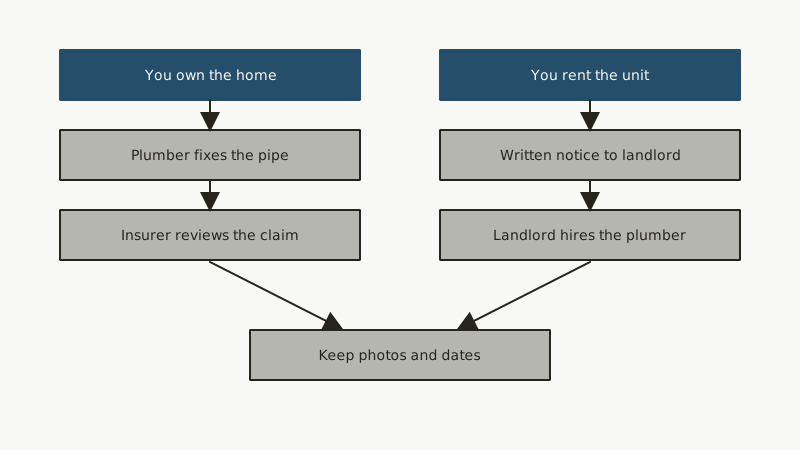
When the water comes from the unit upstairs, you and the neighbor may each need insurance involved. Do not hire the repair yourself in someone else's unit. Ask the landlord or association to confirm in writing who is responsible, and document the damage on your side before anything is dried or painted over.
Does an insurance policy respond to ceiling water damage?
Often for the resulting damage, if the cause was sudden and accidental, for example a pipe that burst. A policy may not pay for the pipe repair itself or for a leak that has run slowly for a long time, and a claim can be refused when the insurer judges the home neglected. Read your policy and notify the insurer quickly.
Save damaged material until the adjuster has had a look, take photos before cleanup, and save the plumber's written finding, since a burst pipe in the wall or a failed fitting is different from a gradual drip. Ask the insurer in writing what is and is not covered. More on insurance and burst pipes is on its own page.
How soon must it dry, and when does mold become a worry?
Immediately matters: the EPA says to fix plumbing leaks and other water problems as soon as possible and to dry wet items completely, since standing water and wet materials can grow mold. Soaked ceiling tile tends to get discarded once mold sets in, and drywall that stays wet usually has to come down.
The EPA says an area of about 10 square feet or less is within reach of many households, while larger damage, sewage water or health concerns call for a professional. Find and stop the source before you dry anything, or the problem returns. A stain that dried with no active leak is a different case, covered in water spots on the ceiling.
What does the plumber do once it is established as a plumbing leak?
That applies when a pipe, drain, fixture or heater is to blame. After closing the water and confirming the source, the plumber uses listening or thermal gear to keep holes few, then fixes or replaces the part, and a written price before anyone starts. Replacing piping or fixtures usually needs a Long Beach permit, while stopping a leak with no new materials does not.
Older homes matter here: bungalows built from 1920 to 1959 in Belmont Shore and Bixby Knolls can conceal galvanized supply pipe and cast iron drainage that fail in the wall cavity above a ceiling. The contractor should show a California license number. Want a local plumber arranged? The quote page is the way in.
Common questions
Is a leaking ceiling an emergency?
Treat it as one if water is actively dripping, the ceiling is bulging, or any electrical fixture is wet. With a pipe as the likely source, close the main, avoid wet wiring and call the right trade the same day. A dry stain that has not grown can be scheduled.
Is shutting the main valve the right reflex?
Yes, when a pipe is possible and you cannot rule it out. It stops a supply leak at once and costs you nothing but a short wait for water. If the leak stops when the main is off, you have your answer. If water keeps coming, think rain, condensation or a drain, and call a roofer or HVAC contractor.
Can I fix the ceiling myself afterward?
Patching drywall suits a weekend project after the source is repaired and everything is bone dry. Painting over a damp stain only hides it, and mold can sit behind the paint. Large sagging areas, wiring, or anything you suspect is mold over about 10 square feet belongs with a professional.
For the wider picture, start with the plumber guide for Long Beach.
References
- California Civil Code 1941.1, habitability of rentals
- U.S. EPA, mold cleanup in your home
- NAIC, will my homeowners policy cover water damage from a burst pipe
- City of Long Beach, plumbing permit requirements
- California Contractors State License Board, hiring a contractor
- Long Beach Utilities, water services and emergency contact
Updated