Overhead stains are a diary of past moisture, and they reveal little about whether water is arriving today. Leaks that dried, sweating ducts, humid attic air condensing and bath fans venting into the wrong place can each leave a mark with no drip at all. Use this page to separate those from a live plumbing fault, the kind our overview of leak and burst-pipe work deals with.
Is this stain history, or is it still being fed?
Press a fingertip to it and study the edges. A hard, dry patch with a faint ring that has not shifted in weeks is likely history. Cool, damp or spongy texture, growth, darkening after a shower or rain, a bulge or a drip all mean it is live. Trace the outline in pencil, then compare it tomorrow or the day after.
A moisture meter reads surface and depth, which matters because drywall can feel dry on the painted side while the paper and insulation behind stay wet. The brown color comes from dissolved material in the water, and it stays visible long after the source is fixed, so a stain does not prove a current leak. For a first test that costs nothing, see the meter check below.
Which causes leave a mark without leaving a puddle?
Four dominate. First, an earlier leak that dried and left its stain. Second, condensation on air-conditioning ducts or cold pipes in the attic. Third, humid air condensing against a cold roof deck, often worsened by a bath or kitchen fan that exhausts into the attic. Fourth, a small, on-and-off leak from the roof or from a fixture above.
These come from general roofing, restoration and plumbing guidance that agrees on the list, and the EPA and Department of Energy back parts of it. The EPA says condensation can signal high humidity and that insulating cold surfaces such as cold-water pipes helps. The DOE says kitchen and bathroom vents should lead outside and never vent into the attic, where moisture can cause serious problems.
Could it be condensation from ducts or the attic?
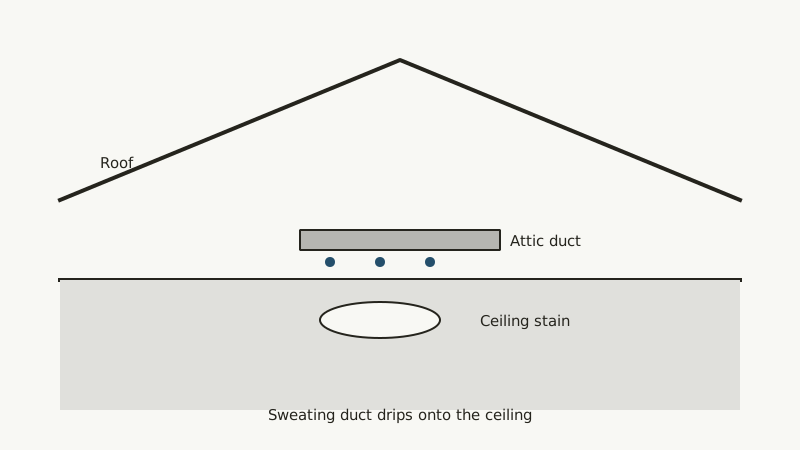
Yes, and it fits the "no leak" pattern well. Cold air running through attic ducts can make the duct's outside surface sweat when the attic air is warm and humid, and the drips soak the insulation first and show on the ceiling later. The stain often follows a duct run, sits near a vent, or appears in several places.
Timing is a clue. Condensation stains tend to appear on warm, humid days and without rain, while a roof leak appears during or after rain. The EPA advises keeping air conditioner drip pans clean and drain lines flowing, since a clogged line can overflow quietly. Insulating ducts and venting fans outside are fixes the DOE describes. A roofer or HVAC technician is the right call for those, not a plumber.
Could a pipe be leaking even though nothing drips?
Yes, a slow one. A pinhole in a supply line, a failing shower pan or tub overflow, or a weeping drain joint can wet the ceiling below only when the fixture above is used. Water stays inside the cavity, wicks across the drywall and shows up as a stain days later with no puddle to find.
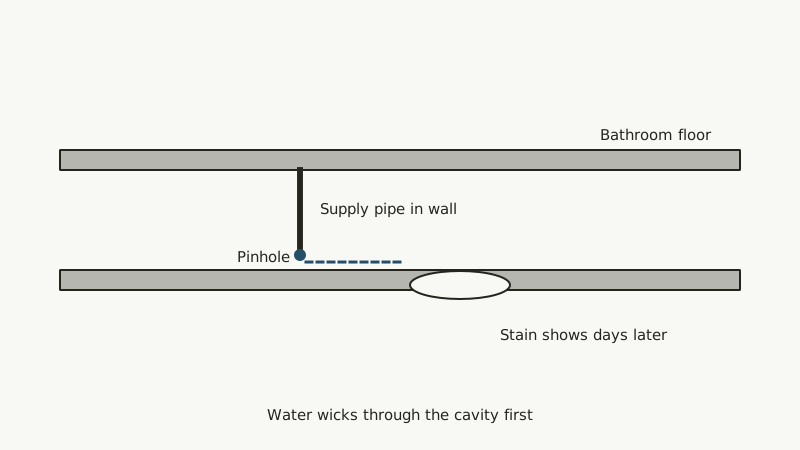
The test is simple. Turn off every tap and appliance, record the meter reading, and compare it after two hours; Long Beach Utilities recommends the same method. A dial that has moved means a supply leak somewhere, and why water bills run high explains the next steps. If the meter holds still, run the fixture above the stain, such as a shower, for a few minutes and watch for the spot to darken, a clue to a drain or shower-pan leak. For a stain below a bathroom, see the guide to a shower leak.
Should I worry about mold behind a stain I cannot explain?
Treat a persistent stain as a moisture problem until proved otherwise. According to the EPA, anything water-damaged should be dried inside 24 to 48 hours to prevent mold, and mold usually returns if the underlying water problem stays unresolved. It also notes roof leaks or insufficient insulation can cause hidden mold above ceiling tiles.
For small areas, under about 10 square feet, the EPA says you can often handle cleanup yourself; larger areas, hidden mold or health concerns call for a professional. Absorbent materials, ceiling tiles for instance, sometimes have to go in the trash. A musty smell, spreading discoloration or a ceiling that feels soft are reasons to open the area and look. Do not just paint over it.
Does the roof or the unit above matter in Long Beach?
It can. A single-story bungalow in Bixby Knolls, Belmont Shore or Naples has only the roof, attic, ducts and its own pipes overhead, so a stain there points to those. In a condo or apartment, the unit above is a prime suspect, and the owner or manager should hear about it in writing, as California Civil Code 1941.1 treats working plumbing as a habitability matter.
Rain is infrequent here, which makes roof leaks intermittent and easy to miss; the stain may appear once a winter. Gutters and flashing matter, and the EPA suggests keeping roof gutters in repair and the ground sloping away from the house. Coastal humidity can also add to attic condensation.
After the repair, how do I erase the mark itself?
Cure the source before anything else and let the ceiling dry all the way. A stain-blocking primer then goes on ahead of the paint, since ordinary paint lets the brown show through. Drywall that is soft, cracked or bowed should be cut out in sections and patched, and wet insulation above it dried or replaced.
A stain that has been dry and stable for months can be primed and painted. If it returns after painting, the moisture source is still active. Our guides to ceiling damage from water leaks and a leak in the ceiling cover the repair side in more detail.
Who do I call, and what will it cost to find the source?
A plumber fits when the meter moves, when the stain lies beneath a bathroom or kitchen, or when it grows on a dry day. A roofer fits a stain that follows rain, and an HVAC technician one that tracks a duct or the air conditioner. The guide to who to call for a ceiling leak sorts out the choice.
Finding a hidden leak without opening the ceiling relies on moisture meters, thermal imaging and listening gear, and the price side is explained under leak detection pricing. To request a visit, use the quote page; the Harbor Lights home page shows our other trades.
Common questions
Is it possible for a stain to exist with no leak anywhere?
Yes. A leak that was fixed or stopped on its own leaves the stain behind, and condensation can create one without any breach in a pipe or roof. A stain is a clue, not proof. Check whether it is damp, whether it grows, and what the meter does before you decide a plumber is needed.
Why does the stain show up only after a shower or heavy rain?
The source is intermittent. After a shower, suspect a drain, tub or shower pan above. After rain, suspect roof, flashing or gutters. Either way, water runs along framing before surfacing, so the actual breach may sit some distance from the spot. A plumber or roofer can trace it.
Is a ceiling stain a safety hazard?
It can be. Wet drywall can sag or drop, and water near fixtures or wiring is an electrical risk. If the ceiling bulges, drips or sags, keep everyone out from under it and cut the circuit for that room from a dry spot. Anything beyond that is a job for a professional.
Will insurance cover a ceiling stain I cannot trace?
Often not. Typical policies reimburse abrupt, accidental damage and exclude gradual leaks and wear, and a stain of unknown origin is hard to claim. Take photos, write down dates, and ask the insurer before approving repairs. Policies differ, so read the declarations page.
References
- U.S. EPA, A Brief Guide to Mold, Moisture, and Your Home
- U.S. EPA, Mold Cleanup in Your Home
- U.S. Department of Energy, Home Ventilation fact sheet
- Long Beach Utilities, high water bills and the two-hour meter check
- Published ceiling-stain guides from roofing, restoration and plumbing firms, read November 2026
- California Civil Code 1941.1, habitability of rentals
Updated