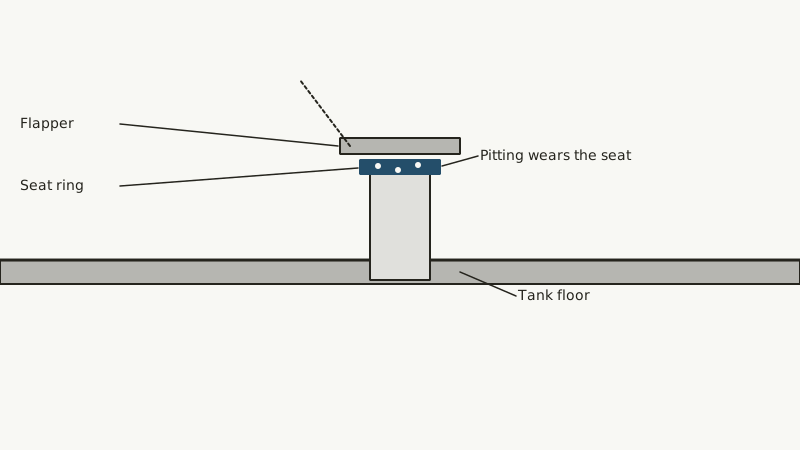
The honest answer has two halves. If the problem is a pitted or corroded flush valve seat, the ring the flapper sits on, a repair kit lets you fix it while the tank stays bolted to the bowl. If the valve body itself leaks at its base, or the culprit is a tank bolt or gasket, the tank must come off. Most running-toilet cases that survive a new flapper fall into the first half. Unsure which fault you have? The toilet repair overview helps sort it.
Can a flush valve really be fixed with the tank still on?
Partly. Repair kits from Korky and Fluidmaster cover the seat with a new plastic ring or sealant ring, so the flapper has a smooth surface to seal against. Neither kit replaces the whole valve. The tank stays bolted down, the job takes under half an hour, and the fix suits seats that are rough, corroded or deposit-covered.
Korky describes its 2-inch kit as repairing corroded or damaged plastic and brass seats, with an adjustable flapper, a plastic seat and silicone sealant in the box, and says it does not require removing the tank. Fluidmaster's 555C instead uses a peel-and-stick sealant ring set on top of the existing seat, with no glue, and it also says to leave the tank on. What they cannot cure is a crack in the valve body, or a leak where the valve exits the bottom of the tank, because that seal is the gasket beneath it. Those faults send you to the bolts and the bowl.
What shows that the seat, rather than something else, is leaking?
First rule out the flapper. Mark the water level with the supply off, wait 10 to 15 minutes, and see if it drops; Fluidmaster says to replace the flapper if it does. Then replace it and test again. If the tank still empties with a fresh flapper in it, suspicion moves to the seat, and Fluidmaster's next step is the flush valve.
Look at the seat itself with a flashlight. Feel for pits, a rough edge, crust or a groove where the flapper meets it. A clean, smooth seat that still leaks points elsewhere: chain length, water height or the fill valve. A film that wipes off easily is only scale. Long Beach Utilities reports hardness averaging about 76 ppm in the blended zone and 220 ppm in the other, so deposits are likelier in the harder zone and may come off with a soft scrub and a soak, no kit required. EPA's point stands: a leaking flapper or seat wastes thousands of gallons yearly. The flapper itself is walked through in flapper replacement.
Which kit do I buy, and does the size matter?
Size matters first. Measure the flush valve opening: 2 inches or 3 inches. The 2-inch kits from both makers will not fit a 3-inch valve, and the larger valves common on newer low-flow toilets need their own kit. Certain one-piece Kohler toilets need a specialty flapper, according to Korky.
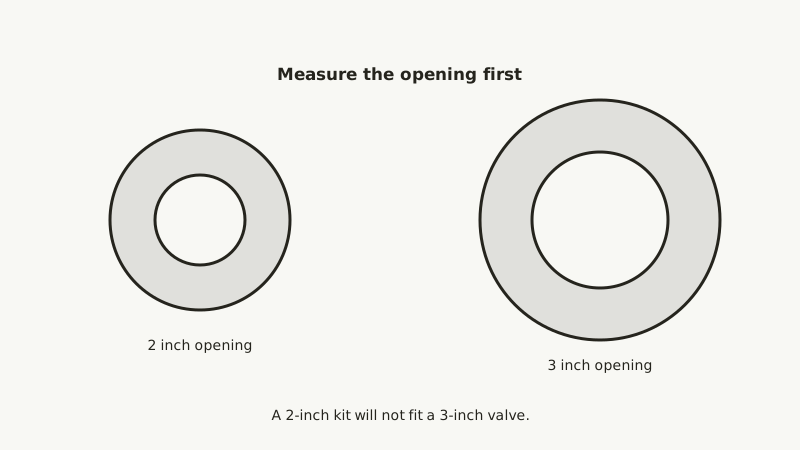
Korky's 2-inch kit includes an adjustable flapper, chain, plastic seat and silicone, and it lists a separate large kit for 3-inch valves with a premium flapper and three plastic seats. Fluidmaster's 555C is for 2-inch valves and comes with its water-saving flapper, which suits toilets using 1.28 to 3.5 gallons per flush or more. WaterSense toilets use 1.28 gallons or less, per the EPA, so check the flapper rating if you have a newer model. Buy the kit whose size matches the opening, not the brand you like best.
How is a seat repair kit installed?
Close the supply, flush the bowl and tank down to nothing, and dry the seat completely. Clean it down to a bare, smooth surface, then apply the kit exactly as its instructions say: a silicone-bonded plastic seat for one maker, a peel-and-stick ring for the other. Let the sealant cure for the stated time, then refill and test.
A few cautions help. Do not skip drying, because silicone and adhesive rings need a dry seat. Remove the old flapper first, and use the kit's flapper rather than reusing the old one. Korky says its silicone seals within 15 minutes and that the repair takes under 15 minutes of work; the kit's printed or video instructions have the exact order, so follow those over any summary. After curing, turn the supply on, wait for it to fill, then redo the mark-and-wait test or add dye. If it still leaks, adjust the chain slack and the water level before doubting the repair. The shutoff valve that makes this possible has its own page: the toilet shutoff valve.
At what point is lifting the tank unavoidable?
Water seeping where the valve exits the tank, or around the tank bolts, points to the gasket seated between tank and bowl, or to a hairline crack in the valve body. Either repair means shutting the supply, draining the tank, undoing the bolts and lifting the tank away.
Warning signs include damp spots beneath the tank or where tank meets bowl, rust around the bolts, and a seat so damaged that a kit cannot bond to it. Fluidmaster's guide lists a full flush valve for each size if the tank still drains after a new flapper. The tank is heavy porcelain that wants fresh gaskets, and one over-tightened bolt can crack it, so plenty of homeowners pass this job along. Leaks at the base and at the tank joint are sorted out in our toilet leak repair article. If the whole toilet is old and cracked or the valve is corroded throughout, compare repair to replacement using the toilet replacement cost. Ask a local plumber for a price via the quote page; the wider menu is on the Harbor Lights home page. Thumbtack's October 2026 guide puts a simple toilet repair at about $100 to $250 nationally.
Common questions
Is a seat kit the same as a new flush valve?
No. Both kits repair or cover the seat, and the valve body stays in place. That is why the tank can stay on. A full flush valve replacement requires removing the tank so the old valve can be unbolted and a new one fitted with a new gasket.
How long will a seat repair keep me busy?
Korky says its kit goes in in under 15 minutes of work, with silicone that seals within 15 minutes. Allow a little extra for draining, drying the seat thoroughly and the refill and test. Skipping the drying step is the most common reason the repair fails.
Does one kit suit every toilet?
No. Measure whether the flush valve is 2 inches or 3 inches, and buy a kit for that size. Some one-piece Kohler toilets need a specialty flapper. If your valve is cracked rather than just rough, a kit will not hold, and the tank must be lifted.
What might a plumber bill for this?
Kit prices vary by brand, and Thumbtack's October 2026 guide lists most toilet parts at $5 to $20 and a plumber's simple toilet repair at $100 to $250. Swapping the valve itself costs more, since pulling the tank adds labor. Go by the written number you get once the plumber has seen the toilet.
References
Updated