A manufactured home keeps its pipes in the open space below the floor, not inside walls, and that changes almost every decision. The belly, the skirting, the crawl height and the building rules all shape how new lines go in. This guide is for owners across Long Beach, Wilmington and nearby who want to add or replace plumbing, and for anyone getting ready to compare bids from a plumber. The Harbor Lights Plumbing home page covers the services we arrange.
Which rulebook applies, and who signs off?
Find out which rules apply to your home, because the answer decides who can issue the permit and what code governs. Homes built to the federal HUD Code after June 15, 1976 are called manufactured homes, and earlier ones are mobile homes. In California, alterations to these homes, including plumbing, generally go through the state housing department, not just the city counter.
Published HCD guidance says changes to plumbing in a manufactured home or mobilehome need an approved application, with some small repairs exempt, such as replacing a trap tailpiece. Enforcement can sit with HCD or with the local building office depending on the location, so ask before you buy materials. We could not read the full exemption table, so confirm each task with the agency.
Do the preparation first. Take photos under the home, find the supply connection, the main shutoff, the drain tie-in, the water heater and any gas line, and sketch where fixtures are above.
How should the pipes be laid out under the floor?
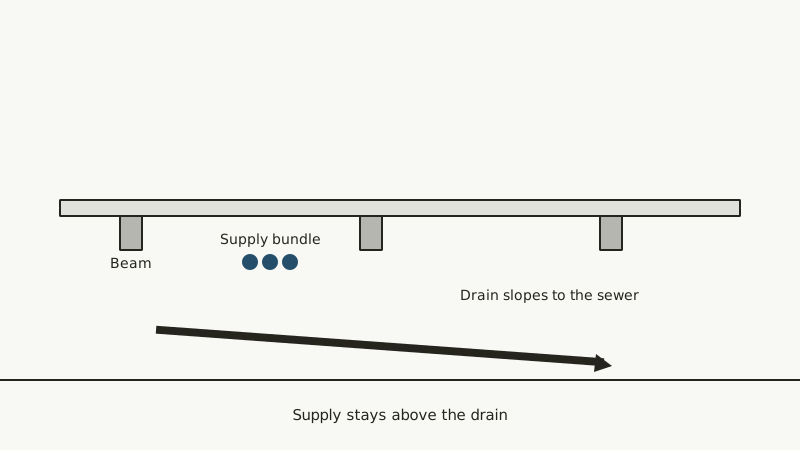
Run supply lines in a neat bundle along the beams, keep them above the drain and support them at regular intervals so they do not sag. Drain lines slope down toward the connection at a steady grade, vent each fixture and avoid long flat runs. Most manufacturers route lines through openings in the floor system, so cut or drill nothing structural.
The usual flow is: a water connection at the home's edge with a shutoff, lines to the water heater, then branches to the kitchen, bath and laundry. A drain line collects from each fixture and exits to the sewer tie-in. Everything needs access so you can reach shutoffs and cleanouts later.
Keep pipes up against the floor system and wrapped, not hanging in the open. Exposed pipe under a home can be damaged by animals, gardening tools and sun. Insulation also stops the pipes sweating and, in a cold snap, helps against freezing, which is rare near the coast but not impossible. Our page on winterizing mobile home plumbing covers this.
What pipe materials suit a manufactured home?
PEX is the common choice for supply because it bends around obstacles with few joints, and California approved it for household water statewide in 2009. Drain lines are usually ABS or PVC plastic. Copper works but costs more and is easier to damage. Older homes may still contain polybutylene, which was sold from about 1978 to 1997 and current building codes do not allow it.
Use fittings that match the pipe and follow the manufacturer's directions. The PEX types and fittings question is taken up in the comparison of type A and type B PEX, and the general steps in repiping with PEX apply here too, with the added need to protect pipe below the floor.
If you see gray polybutylene, plan to replace it rather than extend it. Mixing new work onto failing pipe invites leaks at the joint.
Can I do it myself, and what about gas?
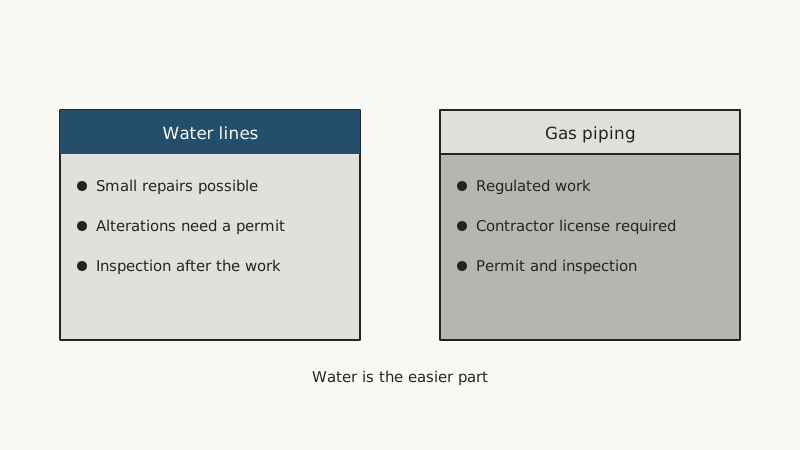
Small repairs are possible, but plumbing alterations generally need a permit and inspection, and some tasks are not meant for homeowners. Water lines are the easier part. Gas piping is regulated work: the state ties it to a contractor license, and Long Beach asks for a permit and a pressure test. Leave every gas connection to a professional.
A gas smell means you get out of the home before anything else. Then report it to the utility that serves you: Long Beach Energy Resources, (562) 570-2140, in Long Beach and Signal Hill, or SoCalGas, 1-800-427-2200, in places like Lakewood, San Pedro and Seal Beach. Dial 911 if anyone is endangered.
Make a list of what the home needs, such as the water heater, kitchen, bath and laundry, and have it ready when you call. A plumber can map the job and name the permit. Our mobile home plumbing inspection guide shows what to look for before starting.
What marks a dependable plumber for this kind of job?
Start with the contractor license. California's state board offers an online lookup by license number, and a legitimate contractor puts the number on every contract. Ask who pulls the permit, whether they have worked on manufactured homes, and for a written scope. A good plumber answers plainly and does not push for a large deposit.
Under state rules, home improvement work over $500 needs a written contract that names materials, a payment schedule, the permit holder and a finish date. Deposits are capped: $1,000 or one tenth of the job, taking the lower number. Our overview of a plumber visit lists what to expect, and the page on best rated plumber covers how to read online ratings.
How do I spot a bid that is padded?
Gather two or three written bids that cover the same scope. Look for itemized labor and materials, a clear permit line and a stated price per fixture or per hour. A bid far above or below the others deserves questions. Ask what is included, then check it against the plumber cost page.
Red flags include vague wording like "plumbing as needed," cash-only pricing, pressure to pay most of the price early and a missing license number. Work under a mobile home is awkward, so labor may run higher than in an open crawlspace, which is fair when explained. A plumber should say why.
Common questions
How many days does this usually take?
A small addition, such as a line to a new fixture, can take a day. A whole-home repipe under a manufactured home may take a few days. Permit and inspection add time. The estimate should show the schedule, the days without water and who handles the paperwork.
Does the plumber need access under the home?
Yes. Skirting panels, access hatches and a clear path let the plumber work and reach shutoffs later. Move stored items, tell the plumber about pets or gates, and point out any known leaks or problem spots before the visit. Good access lowers the labor on your quote.
Do park rules affect the job?
They can. A mobile home park may set its own requirements for contractors, working hours and utility shutoffs, so ask the manager before you schedule anyone. Our areas we cover page shows where we arrange visits across Long Beach and the Harbor communities.
References
- California Department of Housing and Community Development, manufactured and mobilehome permit guidance (HCD MH 604, IB 2024-04)
- Wikipedia, Manufactured housing (HUD Code effective June 15, 1976)
- Wikipedia, Polybutylene (use from about 1978 to 1997)
- City of Long Beach, plumbing permit and gas piping requirements
- California Contractors State License Board, home improvement contracts
Updated