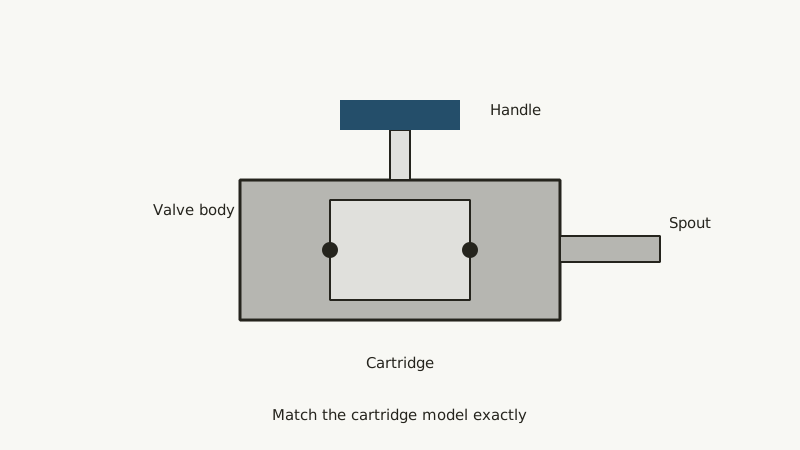
A tap that keeps dripping once you have closed it usually signals a tired rubber part or ceramic cartridge in the valve behind your tub wall. Replacing it needs a screwdriver, a hex key and pliers, plus patience. The EPA calculates that a drip every second wastes upward of 3,000 gallons over a year, so the repair earns its keep. Fixture trouble beyond the tub is covered on our disposal and fixtures page.
Which part has worn out when the tub tap drips?
The valve body hides either one cartridge that mixes the two temperatures, or, in older two-handle sets, a pair of stems that each squeeze a rubber washer onto a metal seat. Rubber hardens, brass seats pit, and little O-rings crack. Once any of those lose their seal, water creeps through despite a closed handle, and that creep is your drip.
How the symptom hints at the culprit:
- Spout trickles after shutoff: cartridge, washer or seat.
- Wet ring around a handle: cracked O-ring or slack packing nut on that stem.
- Spout drips while the showerhead sputters: the diverter is not sealing, or grit has lodged in the cartridge.
- Only the hot side misbehaves: heat ages rubber faster, so one part is commonly the entire story.
Brown marks on the ceiling beneath the bathroom, or a damp wall near the tub, change the picture. That moisture may come from a pipe inside the wall, which belongs to a plumber. Our shower leak guide helps you tell the two cases apart.
Which tools and replacement parts should you gather?
Most tubs yield to a flat screwdriver, a set of hex keys, slip-joint pliers, a rag for the drain and a towel for the floor. The new part is a cartridge, or a washer and seat kit, that matches your faucet exactly. Carry the old piece to the shop, or photograph its brand marking, before you buy anything.
Gather:
- A replacement cartridge, or washers, O-rings and a seat wrench for two-handle sets.
- Silicone grease approved for drinking-water fixtures.
- A cartridge puller, since stubborn cartridges can refuse to budge by hand.
- A small cup for screws.
- A flashlight.
Brands do not interchange. Moen, Delta, Kohler and others each shape their cartridges differently, and a near match leaks or never seats. Moen alone sells several cartridge designs, so compare the old one beside the new one, or search by the model number on the box or valve.
How do you actually change the cartridge or washer?
Isolate the water, stopper the drain, strip off the handle and trim, extract the old part, press in the matching new one with a smear of grease, and rebuild in reverse order. Take phone photos at each stage so reassembly is simple, and lay screws out in the order they came off.
- Isolate the supply. Some tubs have stops behind an access panel. Without them, shut the home's main valve and crack the tub tap open to bleed off pressure.
- Stopper the drain. One tumbled screw can end up in the trap.
- Free the handle. Pry the cap, then back out the screw beneath it.
- Lift off the trim plate. Its screws sit at the sides or behind a gasket.
- Release the retainer. Either a spring clip or a threaded bonnet holds the cartridge; sketch its position first.
- Extract the cartridge or stem. Pull straight, wiggling slightly. A puller helps with seized ones.
- Compare. Length, notches and splines should match your replacement.
- Set the new one. Align the marked side upward unless the brand says otherwise, and lightly grease the rubber rings.
- Rebuild. Retainer, trim, handle, cap.
- Open the supply gradually and watch the valve edges for beads of water.
Two-handle sets add one step: look at the seat. A rough or pitted brass seat chews up a fresh washer within weeks, and needs either a resurfacing tool or a seat wrench and replacement.
Quit and phone a plumber if metal is corroded solid, if a part will not move without hammering, or if the isolation valve cannot close. Forcing seized parts risks cracking the valve inside the wall.
What does a Moen bathroom faucet fix look like?
A Moen single-handle uses a cartridge locked in place by a clip or nut. After closing the supply, you uncover it, remove the clip, pull the cartridge with the maker's puller if needed and drop in an identical model. Getting the exact model number right matters more than eyeballing the size.
On a bathroom sink the work is shorter: a small cap, a set screw under the handle, and the same extraction. When water shows up around the spout's base instead of near the handle, spout O-rings are the probable cause, and swapping them takes minutes. Sink versions are in the leaky sink faucet guide, while older compression sets are handled in the two-handle guide.
How do you track down a leak below the kitchen sink?
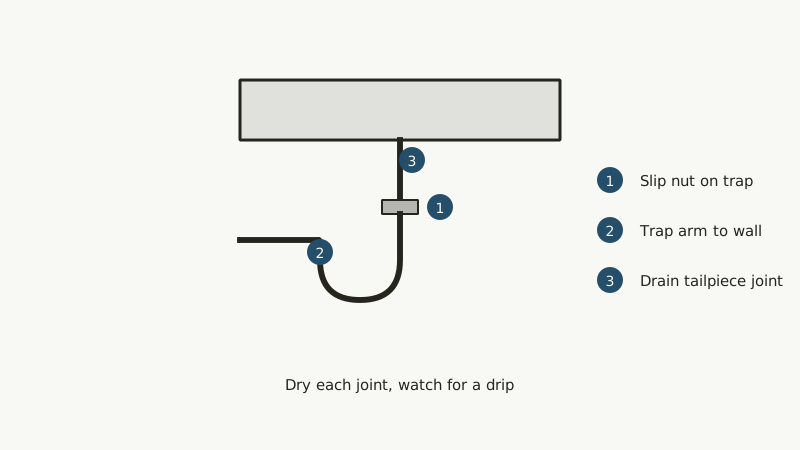
Dry every joint with a rag, then wait for the first bead to reappear. Culprits include a loose slip nut on the trap, a flattened washer, a cracked drain part, a supply connection or a faucet leaking down from above. Hand-tighten plus a small extra turn, replace tired washers, and swap any cracked plastic.
Walk through the cabinet:
- Slip nuts on the trap. Overtightening splits plastic threads.
- Washers. A washer that has gone flat or split should be replaced, not reused.
- Braided supply lines. A seep at the nut can mean a fresh washer or a whole new line, after closing the stop.
- Angle stop valves. A drip from the stem itself usually means the stop needs replacement.
- Disposal joints. A flange or discharge pipe that sweats needs reseating; see disposal service.
Faucet and trap repairs are exempt from plumbing permits in Long Beach, though anything that adds or moves pipe is not. The under-sink leak guide goes deeper, and if you prefer to hire the job out, our fixture pricing page shows typical ranges.
When does the job belong to a plumber?
Hand it over when stops refuse to close, when the tub valve is corroded or sealed behind tile with no access, when stains appear below, when a drip returns after a new cartridge, or when you spot damaged pipe. A flooded bathroom costs far more than a visit, so doubt is reason enough.
Use the quote form to arrange one, and the Harbor Lights Plumbing front page outlines everything else we arrange across the Harbor area. Should water run uncontrolled over a weekend, shut the main and book on the next business day, since our line is staffed weekdays in office hours.
Common questions
Why does the tub drip only when I use hot?
Heat wears seals faster, so the hot-side washer, or the single cartridge, tends to fail first. Replacing that part is the repair. A drip that returns quickly points to a pitted seat or mineral grit scratching the new part, and a plumber can inspect the valve body.
Does the entire house need to lose water?
Only when the tub lacks its own stop valves, and many do. Use the main valve in that case, then open a lower tap to bleed pressure. A main that will not seal completely is a cue to call a plumber, not to lean harder on the handle.
How long should the repair take?
Plan on an hour or two the first time once the right part is in hand, most of it spent removing trim and tracking down the matching cartridge. A stuck cartridge or corroded valve stretches that. Laying parts out in order keeps the afternoon from running away.
Is a permit required for this repair?
Long Beach exempts faucet and trap repairs. Changing pipe, relocating fixtures or any work that alters piping falls under permit rules, while a water heater replacement does need one. For anything past a repair, phone Building and Safety, 562-570-7648, and describe it.
References
Updated