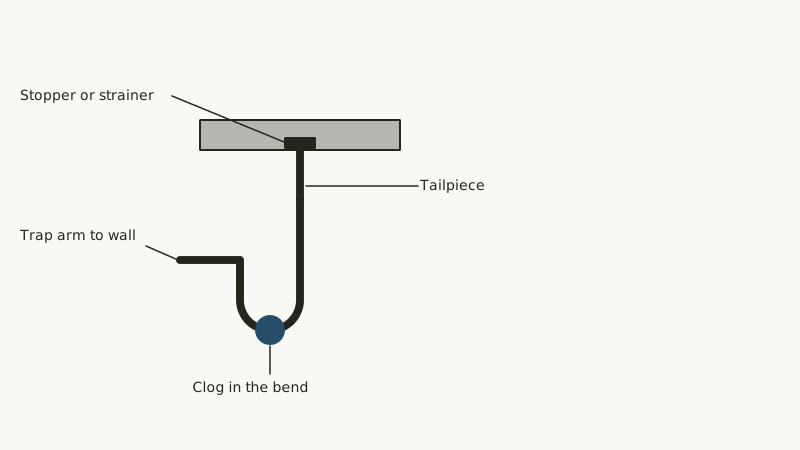
A sink that sinks slowly is carrying a partial blockage: soap, hair, food or grease has narrowed the pipe below the basin, so water squeezes through instead of rushing. When just this one basin is sluggish, the fault lies in its own trap or the short pipe behind it, and a plunger plus a quarter of an hour often fixes it. If other fixtures gurgle as well, expect the obstruction farther along the plumbing. Our overview of clogs and drain problems covers the wider picture; below we work outward from the basin.
What is usually clogging a slow kitchen or bathroom sink?
In kitchens the culprits are grease, coffee grounds, starchy scraps and a film of dish soap that lines the pipe and shrinks the opening. In bathrooms it is hair wrapped around the stopper, toothpaste and a gray paste of soap and skin. Either way, the buildup tends to sit in the first few feet: stopper, tailpiece or trap.
Local conditions add to it. Long Beach Utilities lists grease as one of three leading causes of sewer backups, next to tree roots and pipe failures, and tells residents to wipe fat from pans into the trash instead of the drain. Mineral scale is the other contributor. The utility's 2025 report shows hardness averaging about 76 ppm in its blended zone and 220 ppm in the other, so crusty deposits form faster where the water is harder. Old galvanized drain pipe in 1920s to 1950s bungalows near Belmont Shore and Bixby Knolls also roughens inside with age, which gives debris something to catch on.
How can I tell which kind of slow it is?
Three observations narrow it down: does the basin lag constantly or only after heavy use, are neighbors slow as well, and is there gurgling? A single slow sink implicates its own trap or stopper. Several slow fixtures implicate a branch they share, or the main line. A gurgle means air is fighting its way into the pipe.
Use this quick sort:
- Only this sink, and it has always drained slowly: hair or soap sludge at the stopper or trap.
- Kitchen sink worse after cooking: grease and food in the branch line, sometimes beyond the disposal.
- Double kitchen sink, one basin slow and the other fine: the clog is usually in that basin's tailpiece or trap arm, before the two sides join.
- Sink slow, plus the shower or toilet gurgles: an obstruction on the common line, or a vent fault, which is professional territory.
A sink that is slow but not truly clogged often has a stopper or strainer caked with film that you can lift out and rinse. If your drain issue is the shower instead, our walkthrough on unclogging a shower drain fits better.
What can I try first, and in what order?
Start gentle and cheap. Pop out the stopper or strainer, drag out hair and gunk, then run hot water for about sixty seconds. Then seat a cup plunger over the opening, overflow hole blocked, and work it. Last, dismantle the trap below the basin and clean it by hand. One of those three steps ends most single-sink slowdowns.
Put a bucket below the U-bend first, as the trap is full of dirty water. Turn the nuts by hand, pull the U-shaped trap off, clear it into the bucket, rinse it and reassemble, checking the washers sit flat. Run the water and look for drips. If the sink still crawls, the blockage is deeper than your reach, and a small hand auger may get through it. Do not push a hard wire into a garbage disposal. Sinks fitted with a disposal add more to check, which we cover in garbage disposal repair. Should the trap drip once you refit it, see stopping a leak under the sink.
Are chemical drain cleaners worth using?
We would skip them, and we do not recommend them as a first move. Many are caustic enough to burn skin and eyes if they splash up, none should be blended with another product, and a dose that fails leaves strong chemicals sitting in the pipe for whoever comes next. Mention it on arrival if you used one.
After a splash in the eye, rinse with water for 15 minutes or longer and get medical care; call the national hotline (Poison Help) on 1-800-222-1222. Heed any label warning against use with a disposal or in old pipe. A plunger, hand auger or trap cleaning gets the same result with less risk, and enzyme-type products are gentler, if slower, for routine upkeep. If the basin is brimming and not moving, stop pouring things in and wait for a plumber.
When should a slow sink go to a professional?
Make the call when the plunger and trap cleaning both fail, when several fixtures drag, when gurgles or a sewer odor appear, or when water rises in a bathtub or floor drain. Those point to a shared line, which takes professional gear such as a cable machine or hydro jetting.
Thumbtack's April 2026 guide lists national drain cleaning prices of about $100 to $225 for a kitchen sink and $150 to $225 for a bathroom sink, with snaking around $195 on average and hydro jetting at $350 to $600, up to $1,000 for complex jobs. Main sewer line work ranges $100 to $800. A real Long Beach quote follows a look at the pipe. Describe the sink through our quote page, and a plumber near you inspects the line and writes up a price before starting. Stubborn lines may need a camera scan to show what is inside, and for anything beyond drains, the home page is the directory. Sewage surfacing indoors is urgent: phone the city's water and sewer emergency line, (562) 570-2390.
Why does my shower drain back up when there is no clog?
If the shower floods while the sink and toilet seem fine, the obstruction is often in a branch below the shower, or the main drain is partly choked. Water takes the lowest exit available, which is up. The clog need not be visible, and gurgles elsewhere in the house back up that reading.
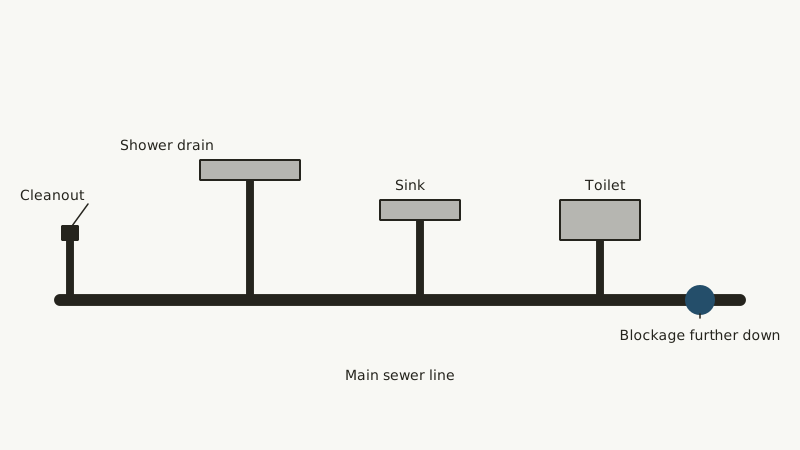
Check the other drains. Run the sink and see whether the shower gurgles; flush the toilet and watch the tub. A soggy floor drain or an overflowing laundry standpipe signals a main line problem, and roots are among the causes Long Beach Utilities names for backups. Stop adding water to a system that is spilling over. A camera lowered into the line shows the cause, and odors rising from the drains are addressed in chasing a sewer smell.
Common questions
What is the fix when one side of a double kitchen sink is slow?
First work out which side lags. If it is one basin, clean its strainer, its tailpiece and the trap arm ahead of the point where the two join. When both are slow, plunge each with the other drain plugged, then clean the trap. Slowness that survives a clean trap lives farther along the line and needs a cable.
Does baking soda with vinegar actually unclog a sink?
A light soap film may loosen, yet neither a hair wad nor hardened grease will dissolve, and the foam mostly fizzes back out of the drain. Hot tap water and a plunger accomplish more. Trying it once in a bathroom sink does no harm, but taking out the stopper and pulling the hair by hand is the dependable fix.
Is a slow drain a real problem or just an annoyance?
Mostly an annoyance, though a half-blocked pipe left alone tends to close completely, and standing water in a kitchen basin brings smells and insects. Trap leaks turn up after repeated do-it-yourself disassembly with tired washers, so fit new ones when you put it back. Take it more seriously once a second fixture joins in.
What do drain cleaning services bill for clearing a bathroom sink?
In Thumbtack's April 2026 national guide a bathroom sink runs about $150 to $225 and a kitchen sink $100 to $225, with snaking averaging close to $195. Local rates differ, and time on site, access and cause all move the bill, so rely on paper from the visit, not a phone estimate.
References
- Long Beach Utilities, healthy sewers (grease and sewer backups)
- Thumbtack, drain cleaning cost guide (updated April 2026)
- Long Beach Utilities, high water bills and contact numbers
- Long Beach Utilities, 2025 water quality report
- Poison Help line, American Association of Poison Control Centers
- City of Long Beach, plumbing permit requirements
Updated