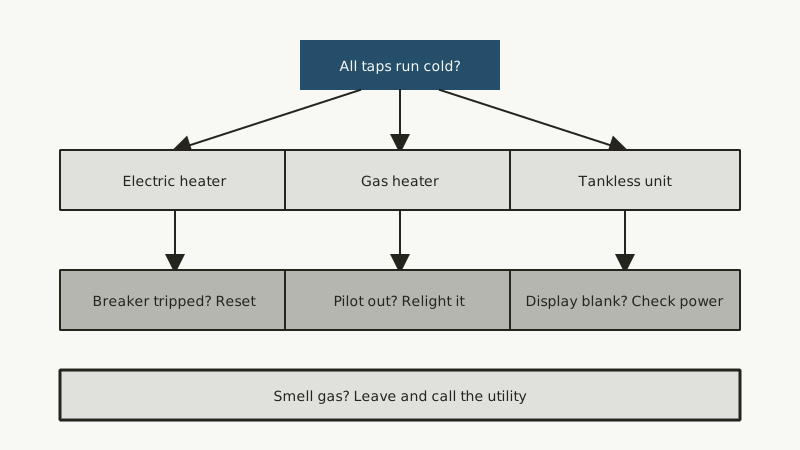
Cold flow from the hot side means one of two things: the heater has stopped making heat, or the heat is stuck somewhere before it reaches your tap. Electric units usually lose power or a heating part. Gas units lose their flame. Tankless units lock themselves out and flash a code. Our water heater repair page covers fixes in depth, and what follows narrows down your own case.
Where do you begin when every tap runs cold?
Identify the heater type, then confirm it has power or fuel. An electric unit needs a live breaker. A gas unit wants a burning pilot or a functioning igniter. A tankless one wants electricity, gas and a readable display. Make sure the inlet stop above the tank stands open, and feel the outlet pipe for any warmth.
A simple order of operations:
- Read the data label. It names the fuel and the model, and many labels print basic troubleshooting.
- Test every faucet. One cold fixture points away from the heater and toward that fixture.
- Check the power switch or the flame. A tripped breaker, an unlit pilot and a blank display each lead somewhere different.
- Use your ears. A burner that roars then clicks off, or an element that buzzes without warming, narrows the list.
Any whiff of gas near the heater changes the plan. Head outside first, then ring your gas utility: Long Beach Energy Resources, (562) 570-2140, in Long Beach and Signal Hill, or SoCalGas, 1-800-427-2200, elsewhere nearby. Leave light switches alone on the way out.
Is a cold hot-water tap ever an emergency?
By itself, seldom. Lack of hot water is uncomfortable and affects hygiene, yet the urgent conditions are a gas odor, water spreading from the tank, a discolored or soft vent pipe, or a tank that rumbles like a kettle. Those deserve a fast response. A dead heater with a dry floor can be scheduled.
When water collects under the tank, shut the inlet stop above it, switch off the heater's power or gas control, and call us. The emergency heater page outlines the following steps. Our line is answered on weekdays in office hours, so on a weekend close the valves and book the next working day.
What should you check on an electric heater first?
Begin at the electrical panel. Electric heaters have their own double breaker, and one that has tripped is a frequent culprit. Reset it once only. If it trips again, stop, because something is shorted. Next comes the small red reset button beneath the access panel of the upper thermostat, which pops when water overheats.
One manufacturer manual posted on a Department of Energy site lays out the order for that high-limit button: kill the breaker, press the button, restore power. Hot water that returns and fades again hints at a bad thermostat or element, which a plumber tests with a meter. More in the electric heater guide.
A caution for anyone tempted: do not remove panels while the breaker is live, and keep your hands dry. Water and mains current in the same cabinet is exactly the combination that hurts people.
What should you check on a gas heater first?
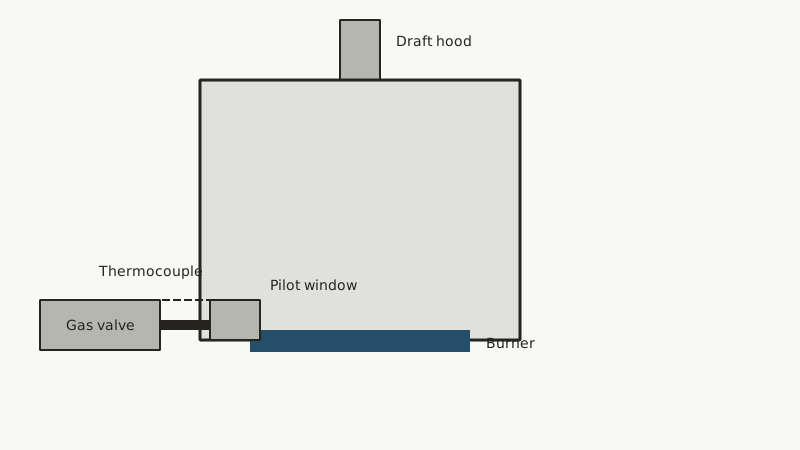
Look through the viewing window or at the igniter. An extinguished pilot explains the cold water. A pilot that catches, then drops out as you release the knob, often means a worn thermocouple, the sensor that confirms the flame to the gas valve. Use the relighting steps printed on the tank itself.
Ground rules for gas:
- If you detect gas as you light up, stop. Exit and call the utility.
- One careful attempt is enough. A pilot that will not stay alight signals a failed part.
- Yellow, lazy flames or soot marks near the draft hood suggest poor combustion, a carbon monoxide risk that a plumber should look at.
A flame that burns well while water stays cold is covered in the pilot-lit guide. Causes there include the gas control valve and a broken dip tube.
Why would a tankless unit stop making hot water?
Tankless units lock out when an input is missing: power, gas, water flow, venting or a clean sensor. The display usually shows a code. Typical triggers: mineral crust inside the heat exchanger, a blocked inlet screen, or a gas valve somebody shut. Your manual decodes the numbers, and a plumber can read and clear them.
Flow plays a part too. A thin trickle may never reach the minimum rate that fires the burner, so the water stays cold. Open a bigger tap before blaming the machine. The tankless guide goes on from here.
What if only one faucet runs cold?
Then suspect that fixture. Possible causes include a tired cartridge, a mixing valve, a gummed-up aerator, or supply lines that were reversed in an earlier repair, and the heater is innocent. Our kitchen sink guide separates the causes and says when a visit pays off.
What are your rights as a renter?
Notify the landlord in writing. Under Civil Code 1941.1, a habitable California rental has to include running hot and cold water, which generally puts the repair on the landlord. Save dates and screenshots of your messages, and leave the heater alone.
Owners should know that Long Beach requires a plumbing permit when a home water heater is replaced, so ask whoever does the swap who applies. Budgeting for one? See the replacement pricing page. If you want a visit arranged, begin with the quote form, and find the wider list of jobs on the Harbor Lights Plumbing front page.
Common questions
Why is only part of the house missing hot water?
Usually a branch or fixture, not the heater. Think worn cartridges, mixing valves and plugged aerators, any of which can leave a single bathroom cold. Run several taps. All cold means the heater deserves attention. A single cold spot means the fixture does.
Do boilers behave differently from tank heaters?
A boiler needs the same ingredients: fuel or power, a working control and a circulating pump. A lockout, a cold pilot, low pressure or a dead pump can leave taps cold. Boilers are rarer in Long Beach homes than tank heaters, and a plumber, not an owner, should service them.
Is a Rheem unit any different from other makes?
The logic matches most brands: power or fuel, a safety sensor, thermostats. What differs is the blink codes and reset steps, printed on the label or in the manual. Read yours, then phone a plumber with the model and serial numbers ready.
What temperature should the heater be set to?
Federal energy guidance points to 120 degrees Fahrenheit for most households. Hotter water scalds faster and wastes fuel, while far cooler storage invites bacteria. If the water has gone lukewarm rather than cold, suspect a thermostat or element before the dial.
References
Updated