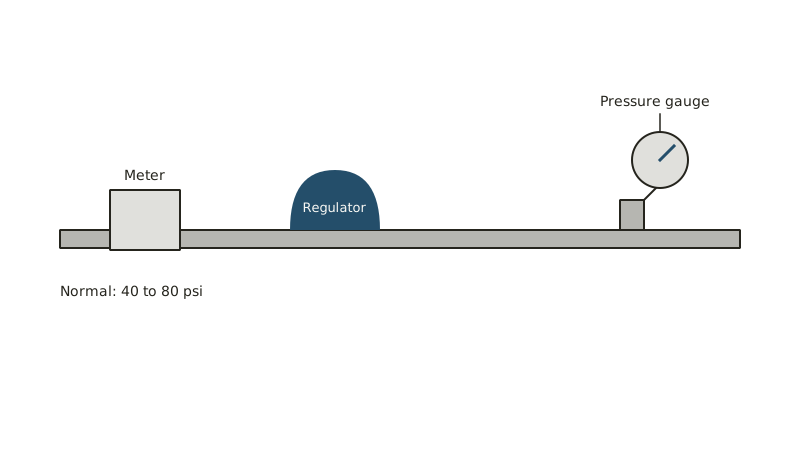
In a mild coastal climate, a burst pipe usually comes from one of four sources: line pressure set too high, metal eaten away from within, a pressure shock when a valve snaps shut, or roots and shifting soil pressing on buried pipe. A hard freeze is possible but rare here. If a pipe has already failed, start with our leak and burst pipe help.
Which cause is the most common in this area?
Corrosion and excess pressure lead the list in older Long Beach houses. Galvanized steel put in during the 1920s to 1950s keeps rusting inward until a section gives, and a regulator that has wandered out of range pounds the fittings around the clock. Freezing is last on the list.
Roughly in order of likelihood for this region:
- Corrosion. Galvanized steel narrows and thins with age. Copper can develop pits where the water chemistry is harsh, so pinholes come first and a split follows.
- Pressure. Plumbing guides treat roughly 80 psi as the top of the safe range, and a dead regulator can admit street pressure, often far higher, to the house.
- Hydraulic shock. A clothes washer solenoid or a lever faucet slams the flow to a halt and the flow stops dead, sending a hammer-blow through the pipe.
- Ground movement and roots. Underground supply and sewer lines crack when soil shifts or roots grow into joints.
- Cold. Hard freezes in Long Beach are uncommon, though exposed lines in a cold garage or an unheated hillside house in San Pedro can still be at risk on a rare night.
Is winter really the season for burst pipes, or does summer count too?
Freezing water expands, and the ice presses outward on the pipe wall. The rupture typically shows up just past the ice plug, where trapped water has no outlet. Summer bursts have other roots: heat lifts pressure in closed lines, irrigation and pool-fill valves clap shut, and heavy demand loads weary fittings.
Hard freezes rarely reach Long Beach, so a winter burst here is more often a pressure or age failure that surfaces in the rainy months, when owners finally notice damp walls. Summer failures gather around fittings and old galvanized elbows. Both seasons end the same way: water off, damaged section replaced.
Prevention gets its own page, the burst pipe prevention checklist.
What are the warning signs before a pipe bursts?
Watch for rusty or tinted water, weaker pressure, hissing or knocking behind walls, damp drywall, blistered paint, a musty smell, or a bill that keeps rising although nobody is washing more. Pipes that fail with no warning are rarer than ones that weep for weeks first.
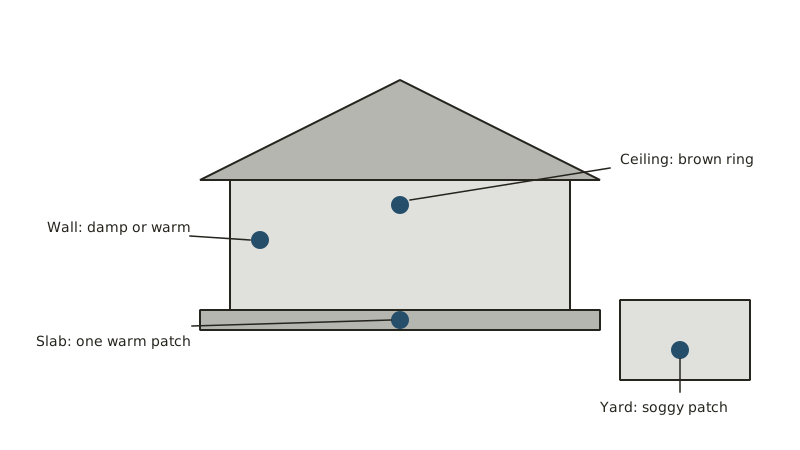
Specific clues by location:
- Wall or floor. A warm spot, a stain that grows, or a soft baseboard.
- Ceiling. A brown ring, a bulge, or drips after someone showers upstairs. Our guide to water leaking from a ceiling explains how to trace it.
- Slab. One floor patch warmer than the rest, or a meter that ticks over while every fixture sits idle.
- Yard. A soggy patch with no rain, or a sudden spike in the bill.
Leaks add up: the EPA puts average household waste above 9,300 gallons a year. To test yours, record the meter, stop all water use for a pair of hours, then read it a second time. Any change means a leak. A longer checklist lives in spotting a split pipe.
How do I check the pressure that is stressing my pipes?
Attach an inexpensive gauge from the hardware store to an outside hose bib and read the dial with everything shut. About 40 to 80 psi is normal. Anything past 80 points to the pressure regulator, a part a plumber can test or replace.
A regulator looks like a squat, bell-shaped valve, usually just inside the front wall or near the meter. Plenty of homes lack one, or still run a unit that predates the current owner. Replacing it is a short job compared with replacing a burst section of pipe, and the cost page on pressure regulator installation has the numbers. If the pressure is fine but the pipes still bang, a water hammer arrestor on the offending appliance can help.
Smelling gas: which number do I dial?
Walk out first and phone from the yard or street. Long Beach Energy Resources, which serves Long Beach and Signal Hill, publishes 562-570-2140 for gas emergencies. SoCalGas publishes 1-800-427-2200 for customers elsewhere in the region. If somebody is in danger, call 911 before either. Plumbers enter after the utility finishes.
Why gas on a page about water pipes? Quakes, roots and corrosion damage both kinds of line, and a hiss inside a wall is easy to mislabel. When you cannot tell which pipe is leaking, treat it as gas until the utility says otherwise.
How can I tell a gas leak has started?
SoCalGas sorts the warning signs into smell, sound and sight: the distinctive gas odor; hissing, whistling or roaring near a pipe; or dirt and water blowing in the air, dead vegetation over a line, or a damaged appliance connection. A few people cannot smell the odorant, so use all three senses.
SoCalGas notes that smell can fail: a diminished sense of smell, olfactory fatigue, or other odors masking the scent can hide a leak. If you suspect one, do not look for the source yourself. Gas piping repairs are regulated work in Long Beach and need a permit. Our page on gas line plumbing explains who may do them.
Common questions
Can warm weather split a pipe?
Warm weather raises pressure in closed plumbing, and quick-closing valves add shock on top. Weak points are old galvanized steel, brittle plastic fittings and regulators nobody has checked. Heat alone seldom does it; pressure already running high does, so read your gauge first.
Will a burst pipe leave mold behind?
It can. Damp drywall and insulation can start growing mold in a day or two, and slow leaks rot framing and flooring. Cut the water, dry things quickly, and take insurance photos. Large or hidden leaks may need a professional drying crew.
A pipe just failed: what do I do first?
Rotate the main valve shut, run the lowest tap so pressure drains, and power down the water heater. Stay away from wet electrical gear, then line up a plumber. Our page on the burst pipe visit walks through what comes next, including what the plumber looks for in the wall.
Is an older house more at risk?
Generally yes. Prewar and midcentury Long Beach houses often hide galvanized steel, and later homes may carry copper with decades behind it. Age is no verdict, but a pipe in its final years can fail from a stress that a newer line would ignore.
For the wider picture, start with plumber long beach.
References
- SoCalGas, Home Energy and Safety Guide, recognizing a natural gas leak
- Long Beach Utilities, gas
- Wikipedia, Hydraulic shock
- US EPA WaterSense, fix a leak
- Published pipe failure guides from several plumbing and restoration sites, checked November 2026
Updated