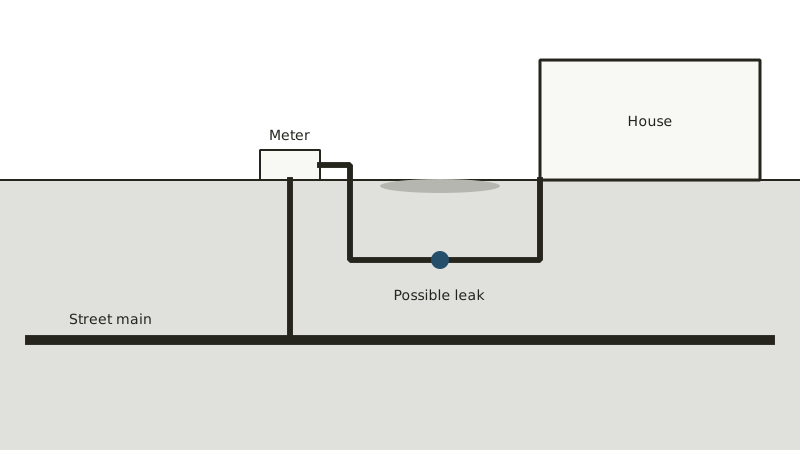
How can you spot a burst pipe buried in the ground?
Look for ground that is wet or sunken when it has not rained and no sprinkler ran, a meter that keeps registering while nobody is home, pressure that drops at every fixture, a hiss or rush near the main, and a bill that has climbed for no reason. Any one clue can mislead. Two or three together point to a buried leak.
This is one branch of the larger topic covered at plumber for leaks, which also explains repair choices. For buried lines, check in this order:
- Yard. A boggy patch, grass that is suddenly lusher than the lawn around it, water collecting along the foundation, or a shallow dip where soil has washed away.
- Sound. With every tap off, listen at the main valve or an outdoor spigot for a faint rushing noise.
- Pressure. If every fixture is weak at once, suspect the supply line rather than one faucet.
- Paperwork. A bill that rises when nothing in your routine changed. For other reasons a bill can jump, see high water bill causes.
- Floor. A warm patch under the flooring may be a hot line leaking beneath a slab, which is its own subject: slab leak repair or repipe.
How does the two-hour meter check work?
Pause every use of water and write down the meter number, or where the low-flow dial is pointing. Wait 120 minutes without touching a tap, then check once more. EPA's guidance is that a reading that has moved probably means a leak. A moving triangle or wheel with all faucets closed gives the same answer.
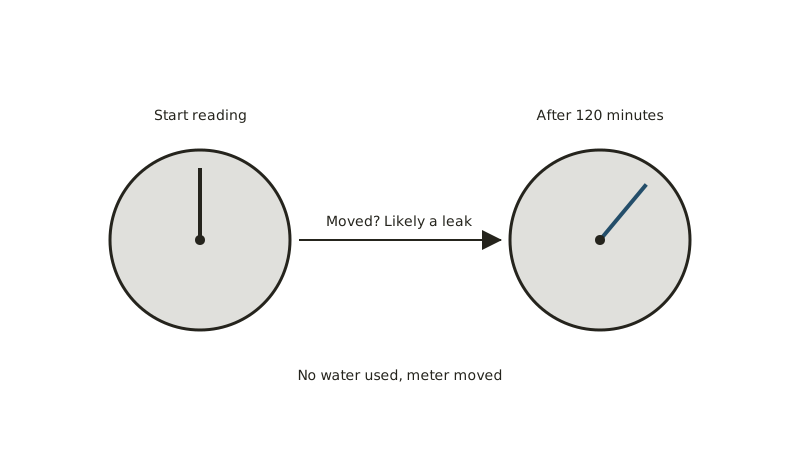
Check that the dishwasher, clothes washer and icemaker are idle and no toilet is running on, or the result means little. Next, close the house main and glance at the meter a final time. If the dial stops, the water was escaping within the walls or fixtures. If it keeps going, the loss is outdoors on the buried run from meter to foundation.
Toilets are the usual indoor culprit, so eliminate that first. EPA suggests dosing the tank with food coloring. If the bowl shows color after ten minutes, the flapper is leaking.
What do you do first about a suspected buried burst?
Turn the house main off, bleed pressure at a single tap, and steer children and pets clear of the soggy ground. Call 811 before anyone digs, because gas and electric lines may run alongside. Next, ring a plumber, or the utility if the wet spot lies on the street side of the meter.
The main valve is not always where you expect. Try the front wall, the garage, the spot beside the water heater, or wherever the line comes into the house. An older home might hide a stiff gate valve untouched for decades. Work it gently now, while nothing is wrong. If it will not close, replacement is a plumber's task.
Who owns the problem depends on the meter. Long Beach Utilities describes its responsibility as ending there. Anything upstream belongs to the utility, whose water and sewer emergency number is (562) 570-2390. Anything downstream is generally the owner's.
Where do buried water lines usually fail?
At joints, fittings, bends and any spot already weakened by corrosion or strain. Age, shifting soil, tree roots, nearby digging, a rocky trench bed and excessive water pressure are the usual contributors. Old galvanized steel and patched copper are the likeliest materials to fail in older housing.
Homes dating to the 1920s through 1950s around Belmont Shore, Bixby Knolls and Naples may still depend on an original galvanized line from the meter, or on copper that has been spliced over the decades. Salty, damp coastal soil can speed corrosion on buried metal, though age and material count for more. Small earthquakes add stress to stiff joints. Typically the repair exposes the break and replaces that section, or the entire line if corrosion is widespread, and trenchless options exist for some jobs.
How is a buried leak located without tearing up the yard?
Plumbers combine a meter and pressure test with listening gear, thermal imaging, pipe locators and sometimes tracer gas to narrow the search to a few feet. Digging comes last, over a marked spot, so the driveway and landscaping are not trenched on a guess.
Cost depends on the method and how easy access is; leak detection cost gives ranges. The quote should state whether detection is billed apart from the repair and what applies when the leak cannot be pinned down. Ask the plumber to mark the line, photograph the break and say how deep it sits.
What happens if you ignore a leak in the ground?
Water carries soil away from under paving, slabs and foundations, runs up the bill, wastes thousands of gallons and feeds mold and rot near the house. EPA puts ordinary household leakage over 9,300 gallons a year, and a failed buried line can dwarf that.
Saturated ground settles, heaves paving and floods crawlspaces. Damp building materials can grow mold within a couple of days, so a wet foundation edge deserves quick attention. Whether insurance pays turns on the policy and whether the loss was sudden, which burst pipes and insurance explains. Photograph the damage before anything gets moved. Indoor warning signs are in spotting a burst pipe.
How do you get a plumber out for this?
Write down what you have seen, such as the wet spot, the meter result, the house's age and the main valve's position, and attach photos. Submit them through the quote form. A local plumber is then lined up, with the quote on paper beforehand. Requests are read weekdays from 9am to 5pm. The Harbor Lights home page shows each step.
Water that will not stop calls for the main to be closed, and 911 where anyone is in danger. A break that cannot wait has its own page: urgent burst pipe help. Any job of $1,000 or more belongs with a contractor with a state license, so get excavation, line replacement and permits in writing.
Common questions
Is the leak under the yard or inside the house?
Do the meter check, shut the house main and compare readings. A dial that stops means water was escaping indoors. A dial that carries on points to the buried line. Soggy ground, a dip in the soil or weak outdoor pressure backs that up, and detection equipment settles the exact spot.
Will the water bill reveal a buried leak?
Often, yes. A jump with no change in use is the classic sign, particularly in a month when the sprinkler schedule stayed the same. Compare it with the same month a year ago and read the meter yourself. The bill only suggests a leak, so the meter test is what confirms it.
Is a buried burst an emergency?
Yes, treat it as urgent: close the main, then call a plumber. Escaping water can undermine soil, flood a crawlspace and run up charges within hours. If it reaches electrical equipment or the floor is flooding, keep everyone clear and call for help right away.
Who pays for the pipe from meter to foundation?
Long Beach Utilities stops at the meter, so the owner generally pays for the line running to the house. Insurance varies: sudden bursts are often treated differently from slow leaks, so read the policy wording and ask the insurer before work starts.
Can I locate the exact spot myself?
You can confirm a leak with the meter, spot wet ground and listen at the valve. Pinpointing the break takes equipment. Do not dig before calling 811, and do not try a shovel on a hunch, since gas and electric lines may run close by.
References
Updated