Smelling gas outranks everything below. Get out of the building, then ring the gas utility from the pavement: Long Beach Energy Resources, (562) 570-2140, in Long Beach and Signal Hill, or SoCalGas, 1-800-427-2200, in most nearby cities. Add 911 when a person is injured or endangered. For planned work, the summary is this: Long Beach wants a permit once gas pipe goes past a short hop, restricts where and how it runs, insists on a pressure test an inspector observes, and expects a contractor to do it. How we arrange that is described on the gas plumber page.
Which codes does a Long Beach gas job answer to?
Gas pipe is treated as plumbing in California. According to the city, plumbing work follows the Uniform Plumbing Code along with the plumbing chapter of Long Beach's municipal code, while its permit answers quote California Plumbing Code section numbers. Editions turn over on a cycle, so the contractor confirms which one applies on the day the permit is issued.
Two practical consequences. Neighboring cities, and the Los Angeles building department that covers San Pedro and Wilmington, may handle gas permits their own way, so ask the office for the property's actual address. And the local amendments are the city's to explain: Building and Safety, 562-570-7648, answers edition questions.
Treat this page as orientation, not a design. Pipe size, material and routing come from a plan the plumber draws up and the inspector approves.
When is a permit needed for gas work?
Nearly always. Long Beach requires a plumbing permit to install any gas piping. The carve-out is narrow: a connection of six feet or less from an outlet already in place to an appliance sharing that room. The city also lists swapping a residential range or dryer as exempt. The permit comes before the work starts.
The sequence in practice:
- Application. A California contractor can apply, as can an owner-builder of a one- or two-family home who lives there and does the work personally and signs a workers' compensation statement.
- Installation. Pipe goes in according to the approved plan.
- Rough inspection. The inspector sees the pipe and watches the pressure test while it is still exposed.
- Final inspection. Appliances are connected and checked.
Permits lapse if the work has not begun 180 days after issue, or halts for 180 days or longer, according to the city's published rules. Nothing may be concealed until it has been inspected and approved.
Think twice before taking the owner-builder route on gas. Mistakes hurt people, and insurers or later buyers may ask to see the permit record.
What pipe and routing rules does the city publish?
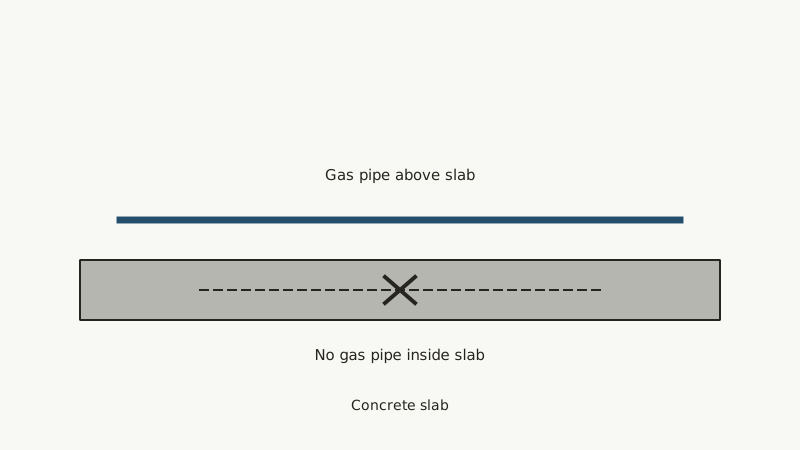
Long Beach forbids gas piping buried under a building or cast inside a slab. Buried pipe must be protected against corrosion, and horizontal metal pipe underground needs at least a foot of soil on top. Polyethylene is approved only outdoors, underground. Pipe or fittings found defective are replaced, never patched.
The same city page adds:
- Unions are allowed at exposed appliance connections and at exposed outdoor spots just past a building shutoff valve, and nowhere else.
- Flexible connectors have length limits, and at a water heater the cap is three feet, with an accessible shutoff valve ahead of the connector.
- Support and protection must keep pipe from sagging or being struck, and steel needs coating where it meets soil or concrete.
- Sizing follows the plumbing code tables. They weigh total appliance demand against run length, so a half-inch line that once fed a stove and a small tank may be too small for a range, dryer, furnace and tankless heater working together.
Sizing is where older houses get caught. Bungalows in Belmont Shore or Bixby Knolls, built when homes had only a few gas appliances, are often piped for much less demand than their owners place on them today. The note on half-inch flexible gas line covers what flex tubing can carry.
How does the pressure test work, and who inspects?
Before walls close, metal gas piping must stay leak-free at 10 psi of air for a minimum of 15 minutes, with an inspector present. The city stresses one more rule: water must never be used to fill a gas system. Final approval follows once the piping is connected and the appliances are checked.
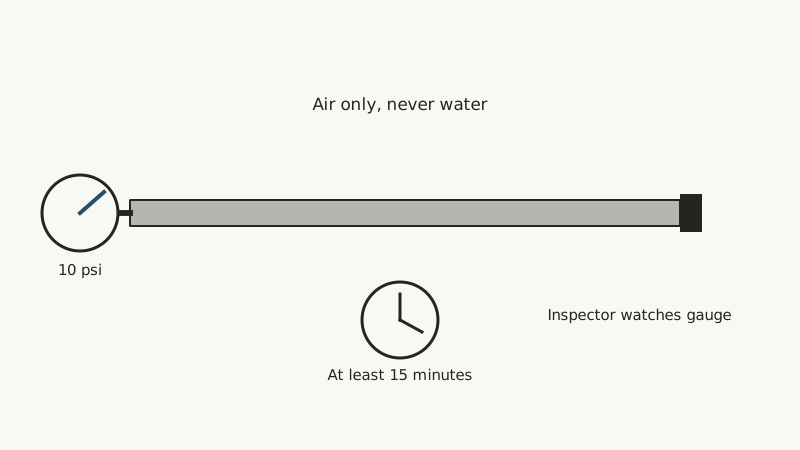
A pressure test exists because a pinhole or loose fitting inside a wall can seep for years unnoticed. Finding it before drywall goes up is cheap. The inspector also reviews supports, clearances, shutoff valves and appliance connections, and at final looks at combustion air and venting.
Shutoff valves that react to earthquakes are another topic, handled in the seismic gas valve guide.
Which additional rules govern a gas-fired water heater?
A fuel-burning heater may not be placed in a bedroom, bathroom or clothes closet in Long Beach, nor in a tight space that opens onto a bedroom or bath. In a garage the pilot, burners and switches must sit 18 inches or more above the floor. A cold water shutoff, a relief valve discharging safely, earthquake straps and proper venting round out the list.
A heater replacement carries its own plumbing permit in Long Beach. When a tankless unit takes the place of a tank, the gas line frequently has to be enlarged, which brings the gas permit rules above into play. The gas water heater price guide shows what that adds.
Who is permitted to install it, and what is the likely price?
Running gas pipe is contractor work, and the contractor must hold a plumbing license issued by California. Verify the number on the state licensing board's lookup, expect written terms on jobs above $500, and limit a deposit to the lower of $1,000 and ten percent of the job. Cost turns on length, access and materials.
Ranges are on the gas line pricing page, and the service itself is described on the gas line page. Pricing for your own property starts at the quote form, and the Harbor Lights Plumbing home page lists other services. Our phone is answered weekdays in office hours, and anything that smells like gas goes to your gas utility, never to us.
Common questions
What is the right response to a gas smell?
Leave right away. Call the gas utility only once you have cleared the building. Summon 911 if there is danger to anyone. Skip light switches, indoor phones and anything that might spark, and resist searching for the source. In Long Beach and Signal Hill that is Long Beach Energy Resources, (562) 570-2140; SoCalGas, 1-800-427-2200, serves most nearby cities. The utility will tell you when re-entry is safe.
May I install gas pipe in my own house?
An owner-builder of a one- or two-family home can pull a permit for work personally done, provided they live in the house and sign the workers' compensation statement. Gas mistakes are dangerous, so most owners hire out. Whoever does it needs the permit, a witnessed pressure test and inspection.
Does connecting a new range or dryer need a permit?
Swapping an existing range or dryer is exempt, and so is a run of six feet or less from an existing outlet in the same room. A new outlet or a longer run calls for a permit. Unsure? The Permit Center can settle it before you start.
Why is gas pipe barred from slabs and underground beneath buildings?
A leak in those spots could neither be seen nor reached, and gas could pool under the structure. So Long Beach requires routing around the building, through walls or attic space, or outdoors with protection, instead of burying pipe under floors.
References
Updated